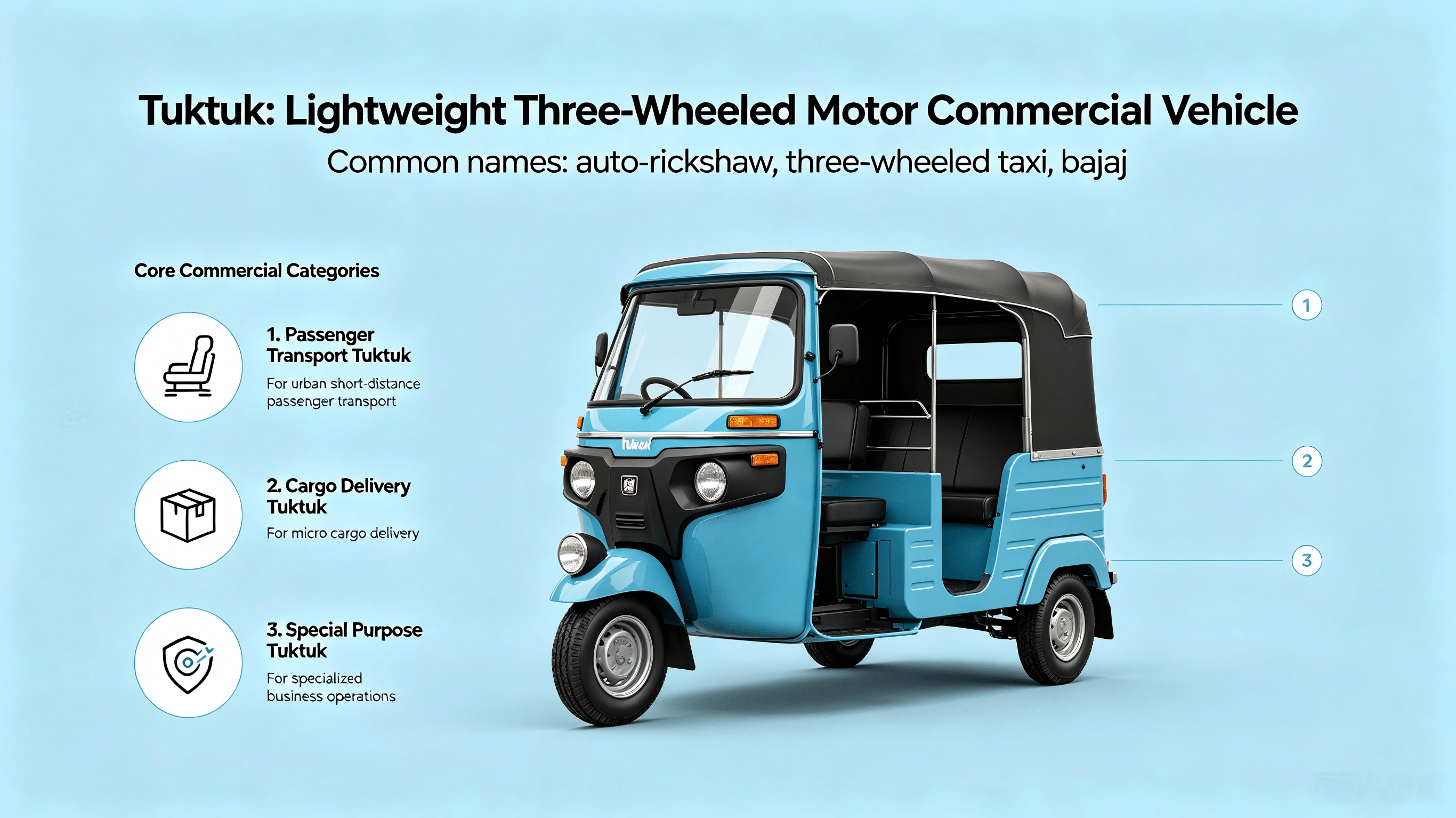
Commonly named auto-rickshaw, three-wheeled taxi and bajaj in global automotive industry, the tuktuk refers to a lightweight three-wheel motor commercial vehicle with integrated driving cabin and load-bearing carriage, which is the most cost-effective micro commercial transport tool for short-distance urban business scenarios. For B-end car buyers, all mass-produced factory direct-sale tuktuk products are divided into three core commercial categories, matching different enterprise operation projects.
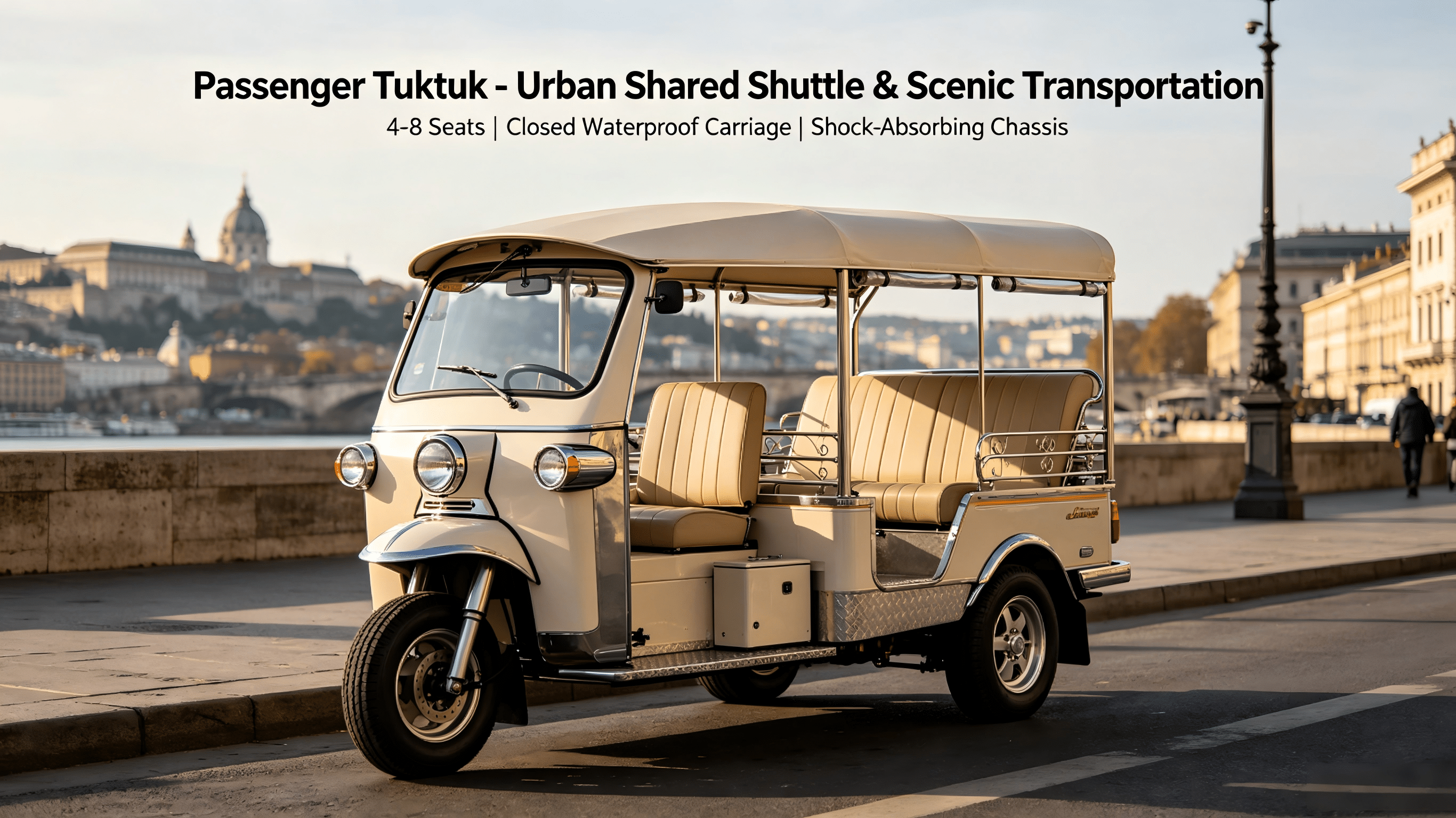
First, passenger tuktuk. It is the classic mainstream tuktuk model, equipped with 4-8 passenger seats, closed waterproof carriage and shock-absorbing chassis, specially used for urban shared shuttle, scenic spot tourist transportation, community commuter charter and airport peripheral pick-up business. This tuktuk type is the top pick for transport operating companies and scenic spot B-end purchasers.
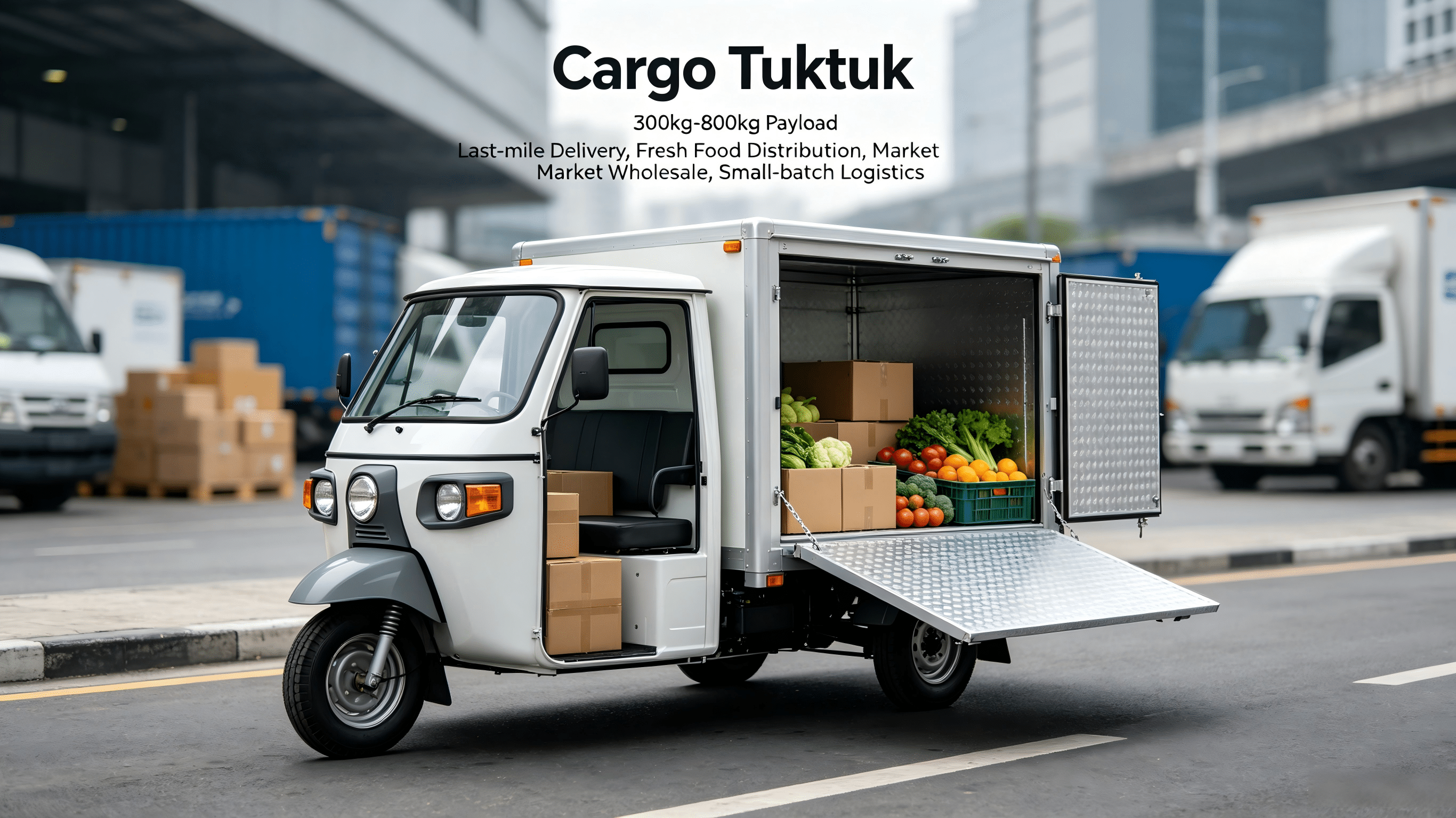
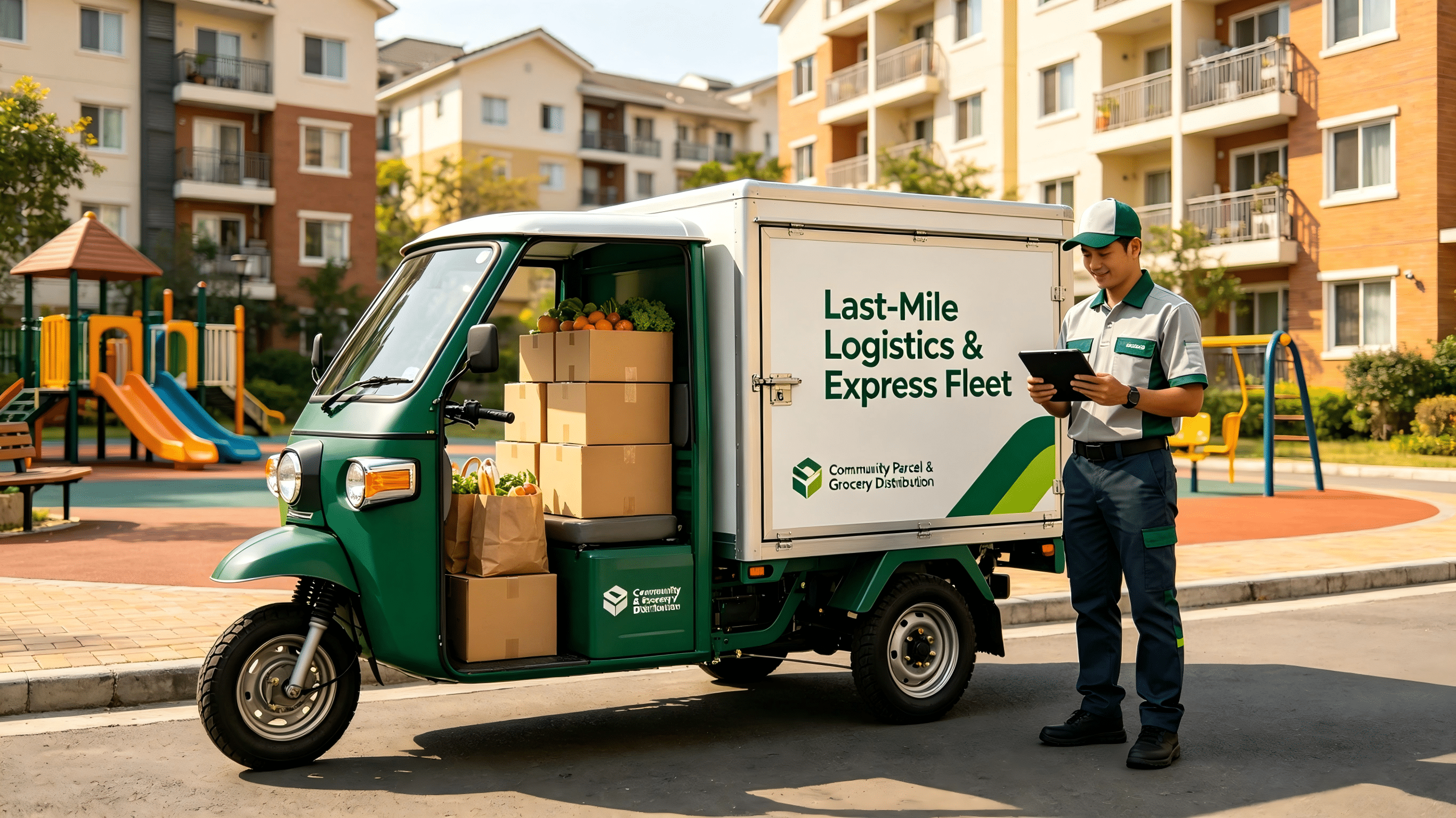
Second, cargo tuktuk. Refitted with closed cargo box, open cargo bed and cold-chain insulated carriage, the cargo tuktuk supports 300kg to 800kg standard commercial payload, tailored for last-mile parcel delivery, fresh food distribution, market wholesale cargo transit and urban small-batch logistics distribution. Local logistics fleets and supply chain enterprises occupy the largest bulk purchase volume of this tuktuk model globally.
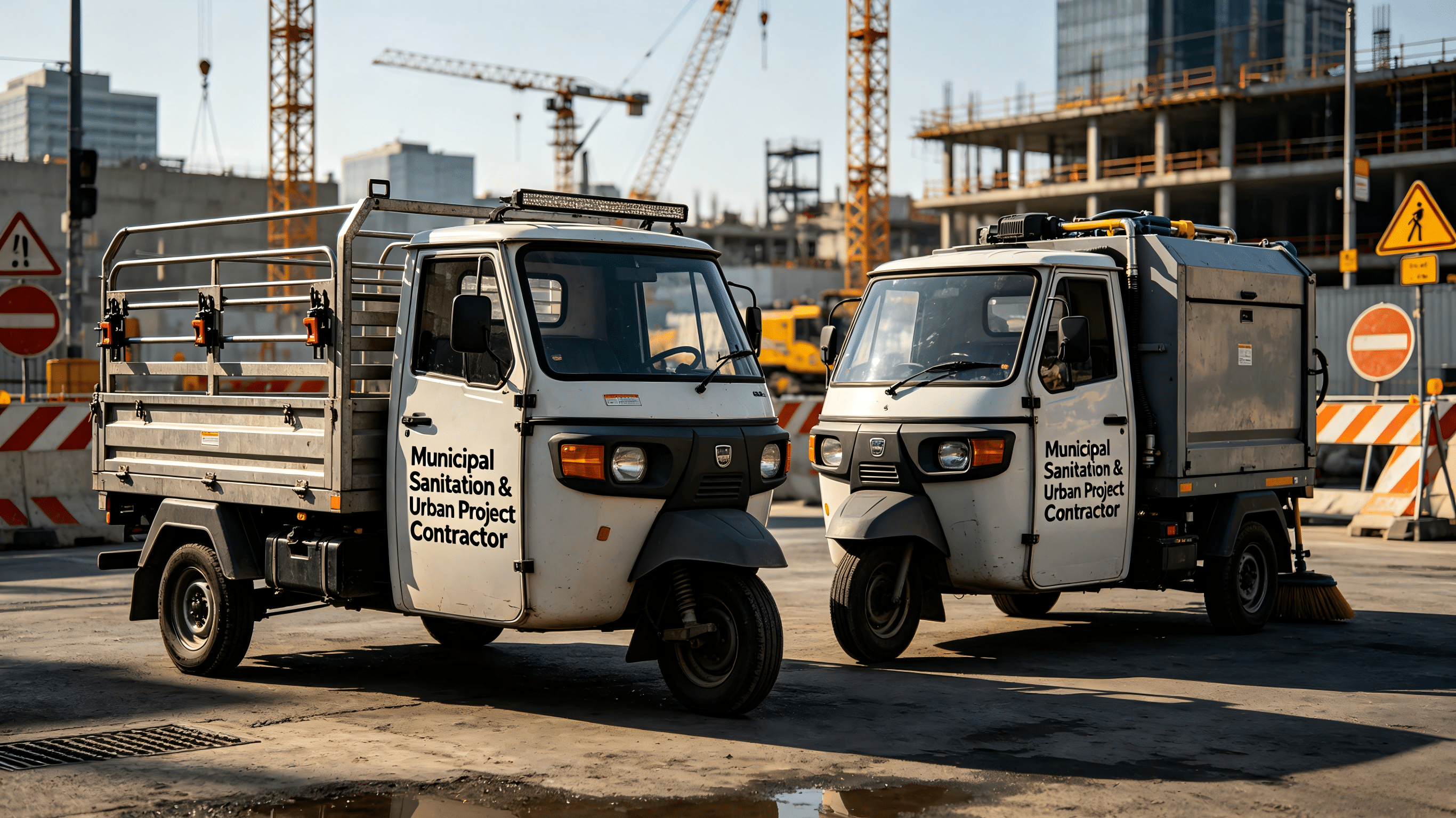
Third, multi-functional customized tuktuk. As an upgraded B-end exclusive tuktuk version, it supports merchant brand outer wrapping, mobile retail counter refit, sanitation cleaning module and advertising carriage customization. It is favored by chain brands, municipal engineering contractors and commercial advertising operating enterprises for personalized fleet procurement
Why B-End Enterprise Buyers Prioritize Bulk Tuktuk Purchase?
Compared with traditional 4-wheel commercial vans, motorcycles and small trucks, the commercial tuktuk brings exclusive business profit and operational advantages for fleet enterprises, which is the core reason why global B2B vehicle procurement orders of tuktuk surge year by year:
1. Ultra-Low Procurement & Fleet Operating Cost
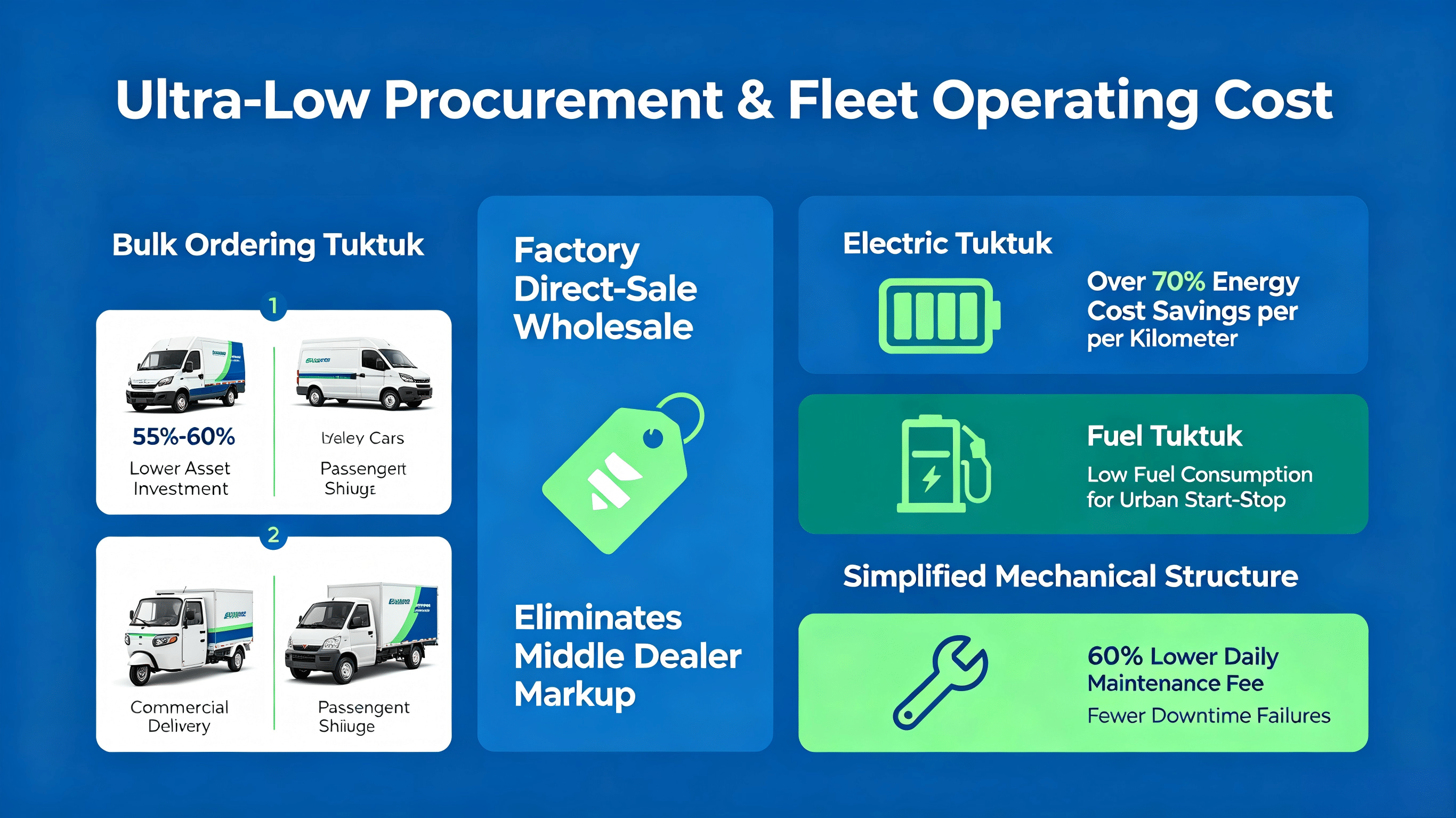
For enterprise finance and procurement departments, bulk ordering tuktuk cuts overall asset investment by 55%-60% compared with commercial delivery vans and passenger shuttle cars. Factory direct-sale wholesale tuktuk eliminates middle dealer markup, greatly reducing unit fleet procurement budget. Meanwhile, both fuel tuktuk and electric tuktuk own ultra-low daily operating cost: electric commercial tuktuk saves over 70% energy cost per kilometer; fuel tuktuk realizes low fuel consumption for frequent urban start-stop driving. Besides, tuktuk adopts simplified mechanical structure, with 60% lower daily maintenance fee and fewer downtime failures, cutting enterprise after-sales fleet maintenance labor and parts cost massively.
2. Unmatched Urban Traffic Adaptability For Commercial Operation
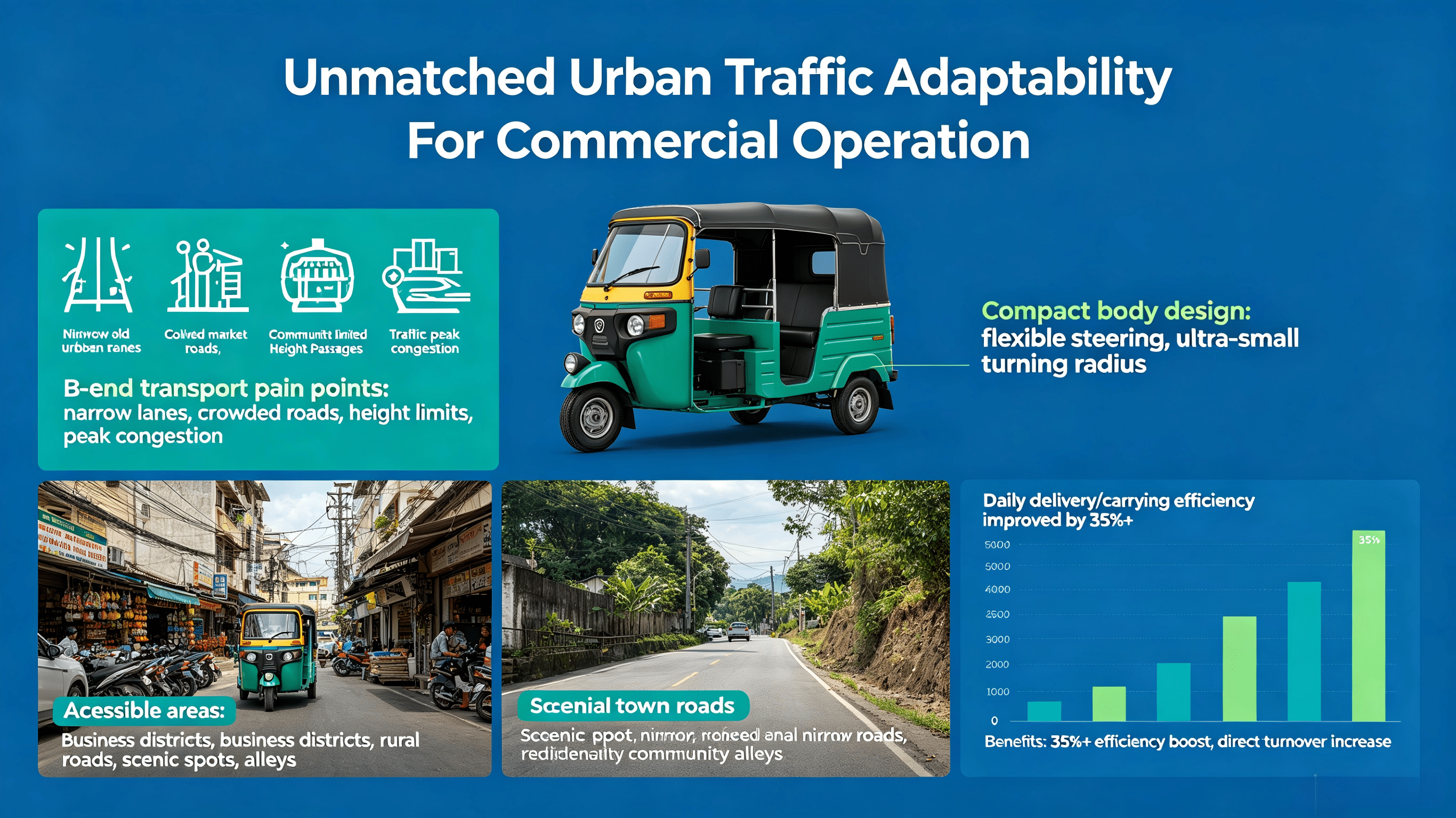
Most B-end transport and delivery businesses face pain points including narrow old urban lanes, crowded market roads, community limited height passages and traffic peak congestion. The compact body design of standard commercial tuktuk realizes flexible steering and ultra-small turning radius, freely passing crowded business districts, rural town roads, scenic spot narrow roads and residential community alleys that large commercial vehicles cannot access. For last-mile logistics fleets and urban passenger shuttle enterprises, tuktuk improves daily delivery and carrying efficiency by 35%+, lifting overall business turnover directly.
3. Fast ROI & Low Business Operation Risk
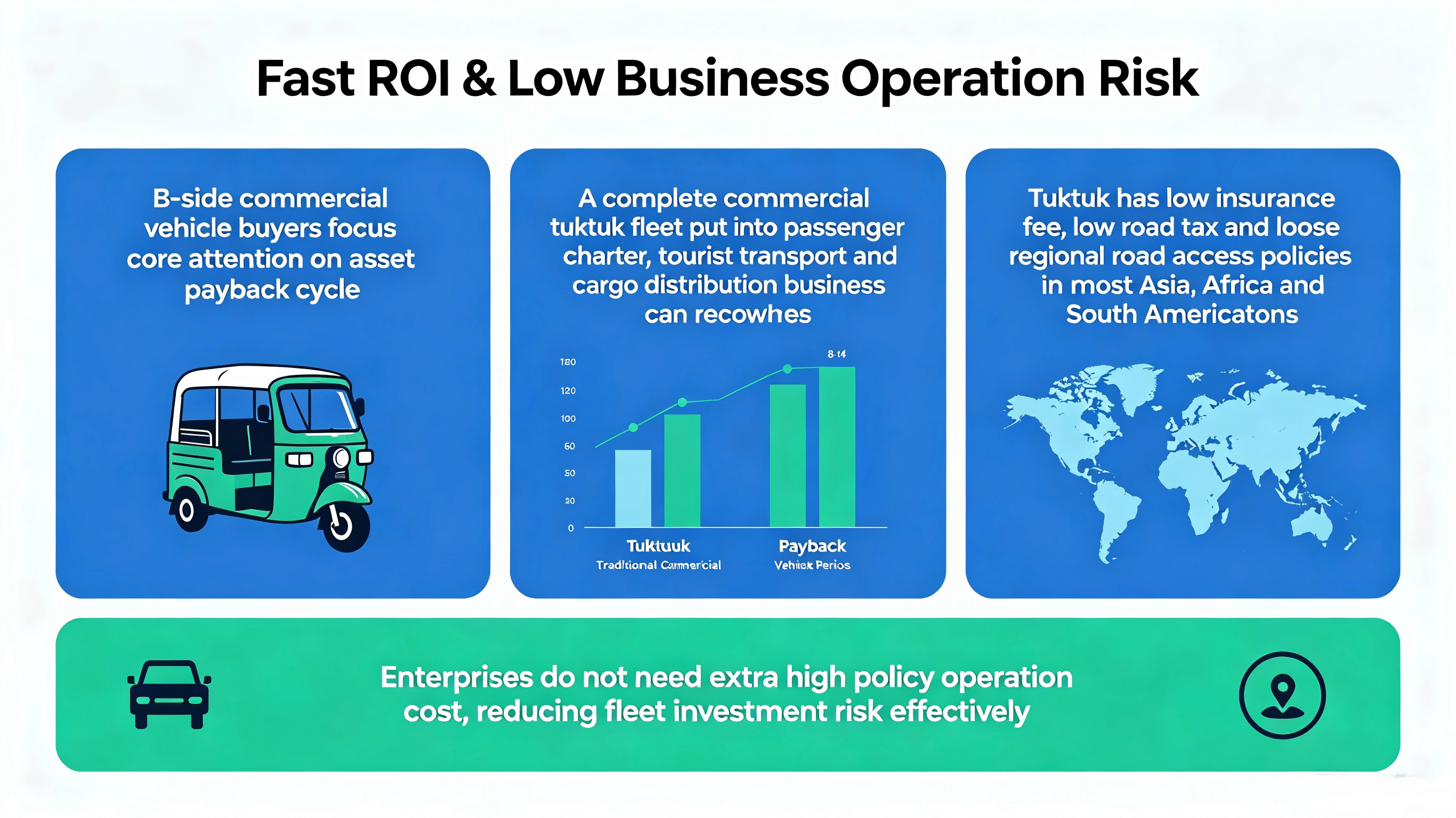
B-side commercial vehicle buyers focus core attention on asset payback cycle. A complete commercial tuktuk fleet puts into passenger charter, tourist transport and cargo distribution business can recover procurement cost within 8-14 months on average, far faster than traditional commercial vehicle fleets. Moreover, tuktuk has low insurance fee, low road tax and loose regional road access policies in most Asia, Africa and South America business zones; enterprises do not need extra high policy operation cost, reducing fleet investment risk effectively.
4. Bulk Customization & Cross-Border B2B Supply Support
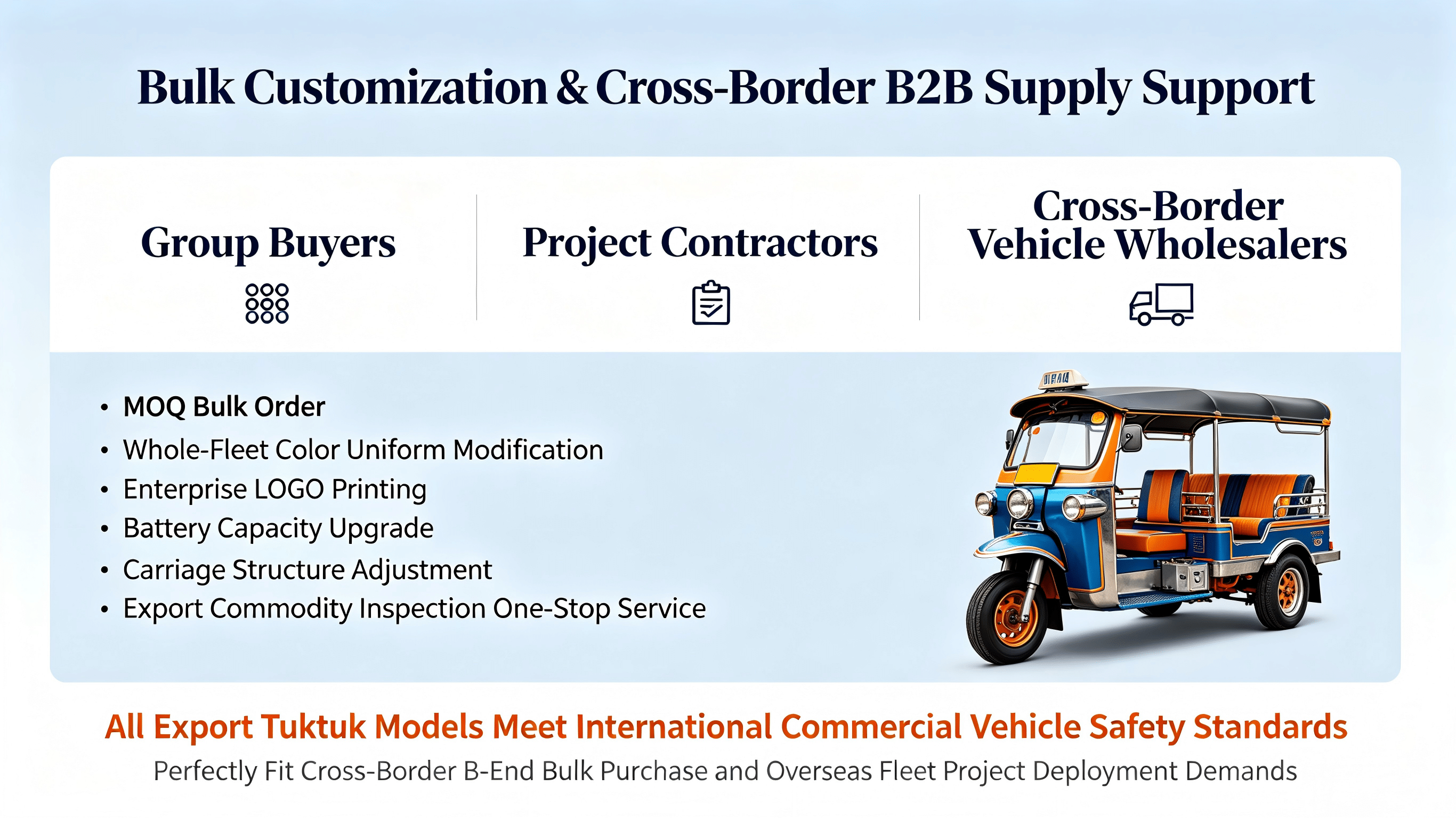
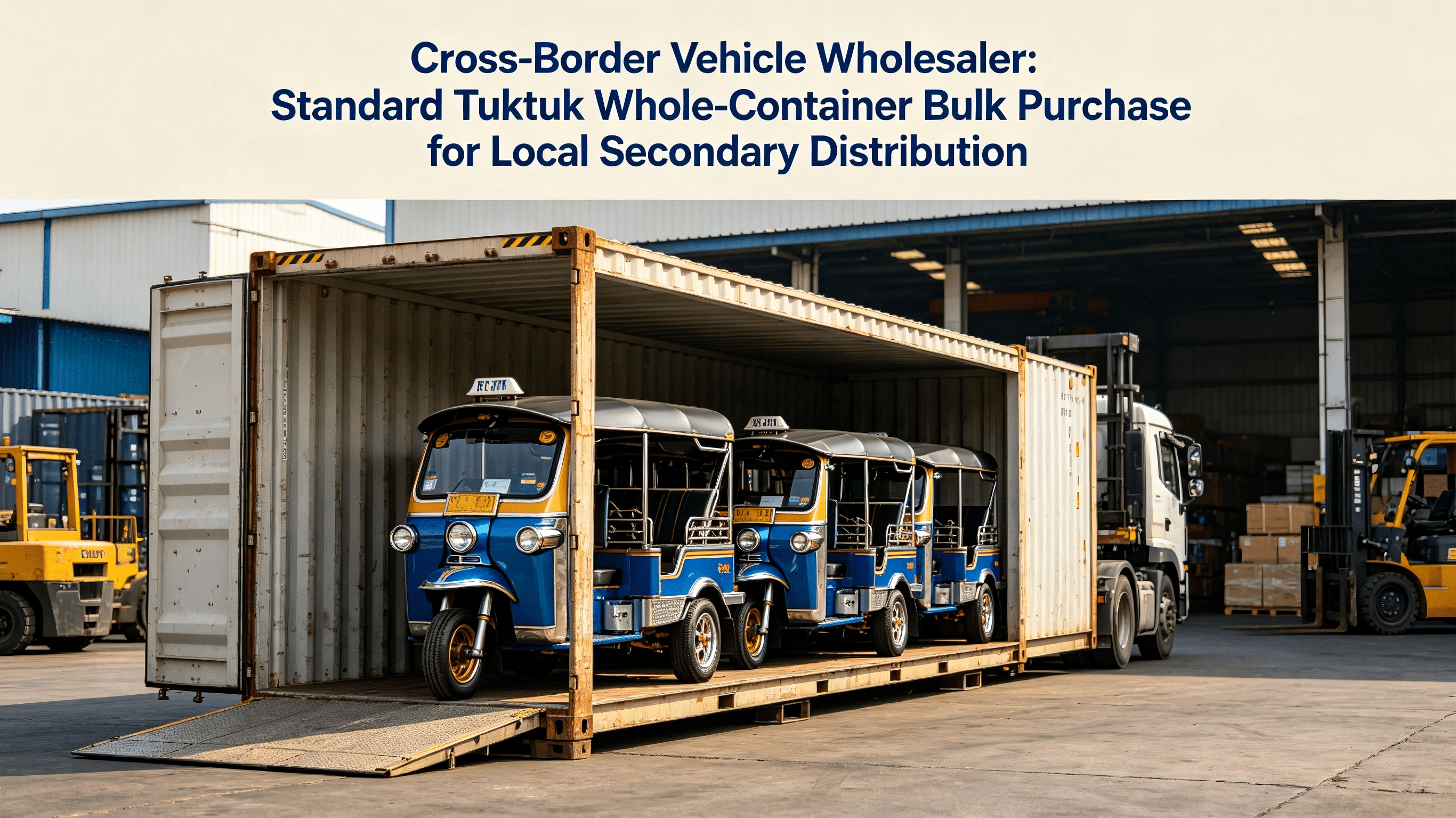
Facing group buyers, project contractors and cross-border vehicle wholesalers, formal tuktuk manufacturers support MOQ bulk order, whole-fleet color uniform modification, enterprise LOGO printing, battery capacity upgrade, carriage structure adjustment and export commodity inspection one-stop service. All export tuktuk models meet international commercial vehicle safety standards, fitting cross-border B-end bulk purchase and overseas fleet project deployment demands perfectly.
B-End Tuktuk Buying Checklist: Key Parameters For Enterprise Procurement
Different from individual consumer tuktuk purchase, B-end fleet procurement needs to screen tuktuk models from commercial operation durability, batch consistency, after-sales spare parts supply and regional adaptation dimensions. Professional purchasing managers can follow this tuktuk selection standard:
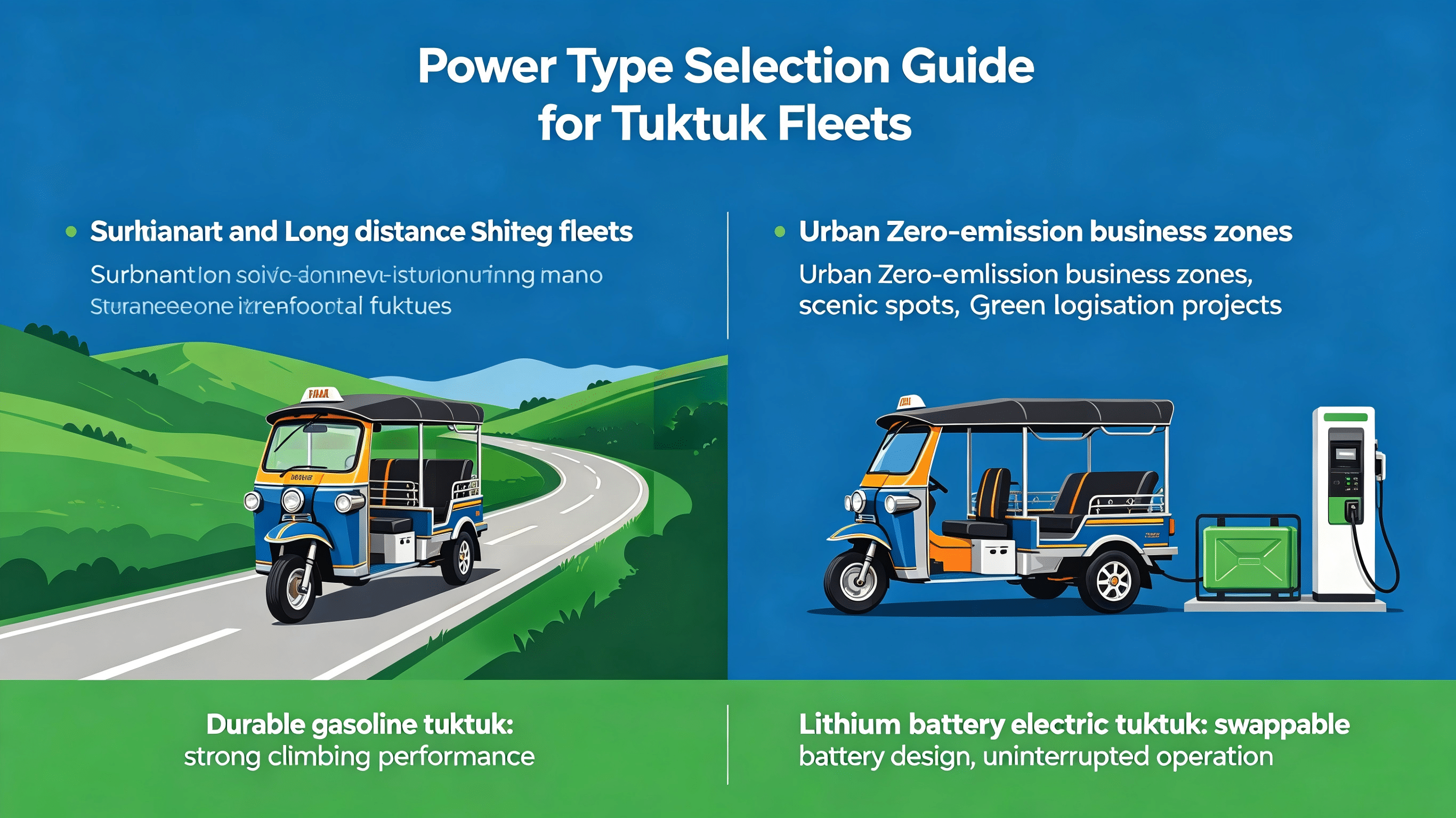
First, Power type selection. For suburban and long-distance shuttle fleets, choose durable gasoline tuktuk with strong climbing performance; for urban zero-emission business zones, scenic spots and green logistics projects, prioritize lithium battery electric tuktuk with swappable battery design to realize uninterrupted fleet operation.
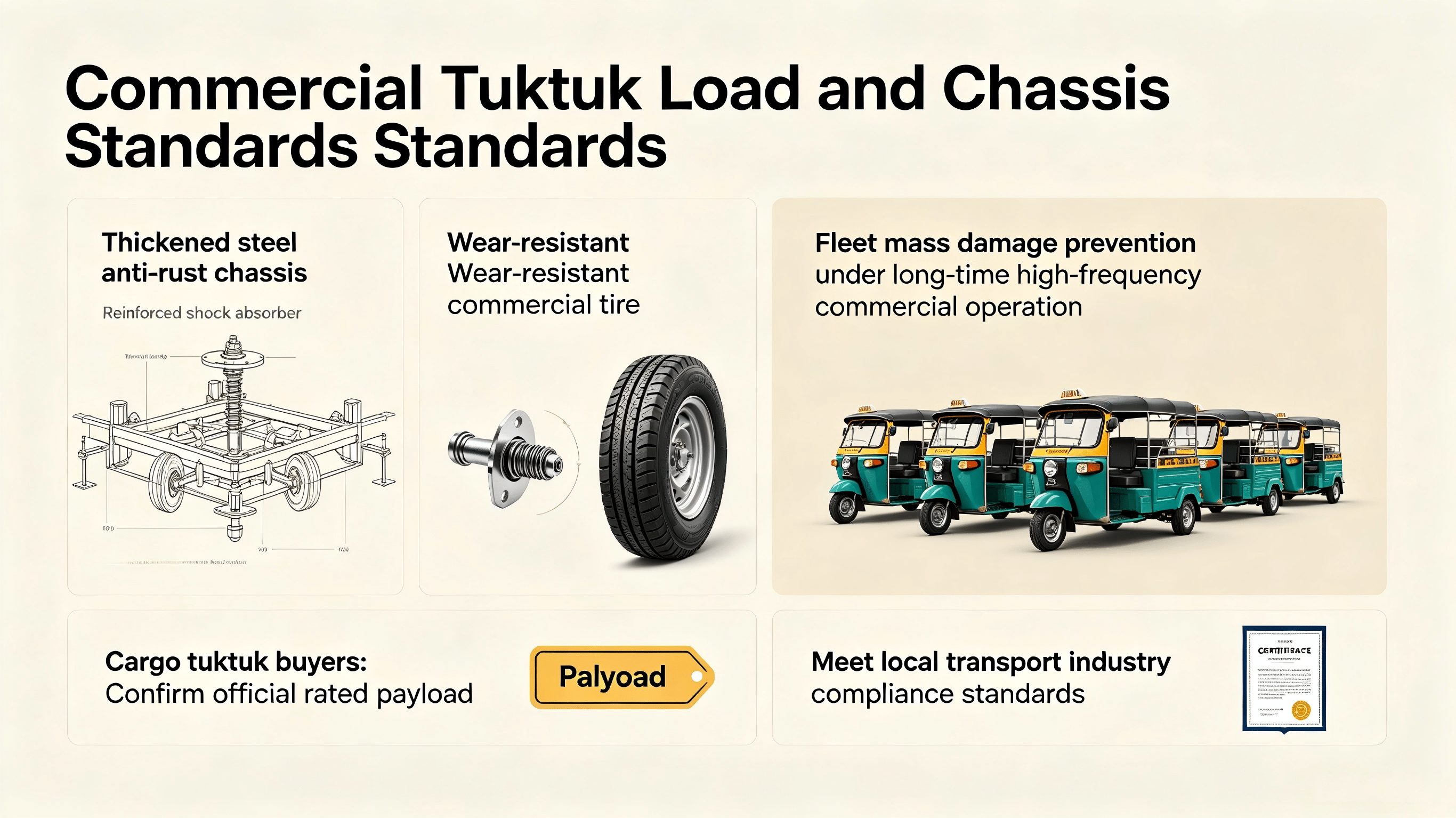
Second, Load and chassis standard. Commercial used tuktuk must adopt thickened steel anti-rust chassis, reinforced shock absorber and wear-resistant commercial tire, avoiding fleet mass damage under long-time high-frequency commercial operation. Cargo tuktuk buyers need to confirm official rated payload to meet local transport industry compliance standards.
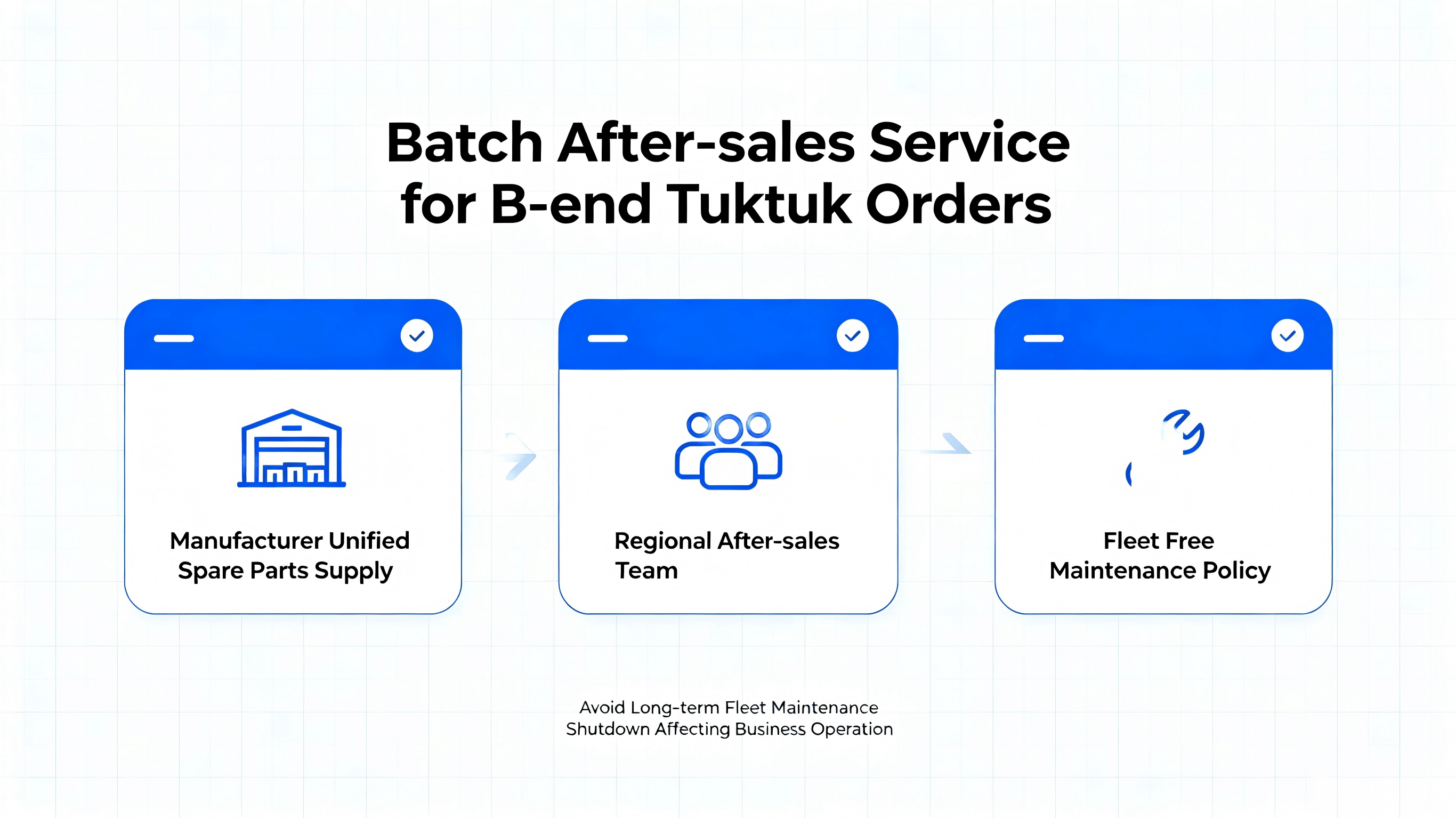
Third, Batch after-sales service. B-end bulk tuktuk orders require manufacturer unified spare parts supply, regional after-sales team and fleet free maintenance policy, to avoid long-term fleet maintenance shutdown affecting business operation.
Hot B-End Industry Scenarios For 2026 Tuktuk Bulk Procurement
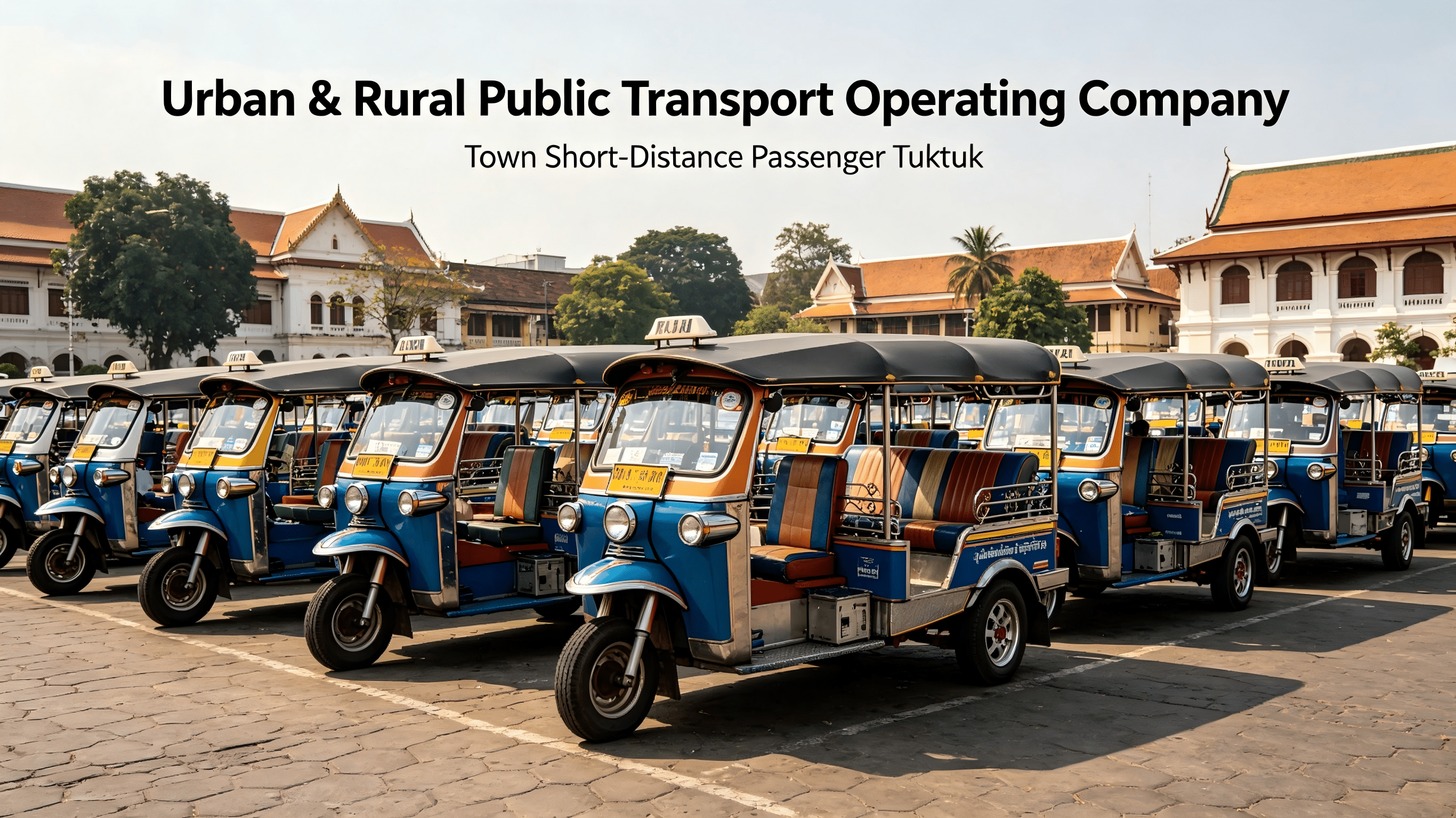
1.Urban & Rural Public Transport Operating Company: Batch passenger tuktuk for town short-distance passenger transport
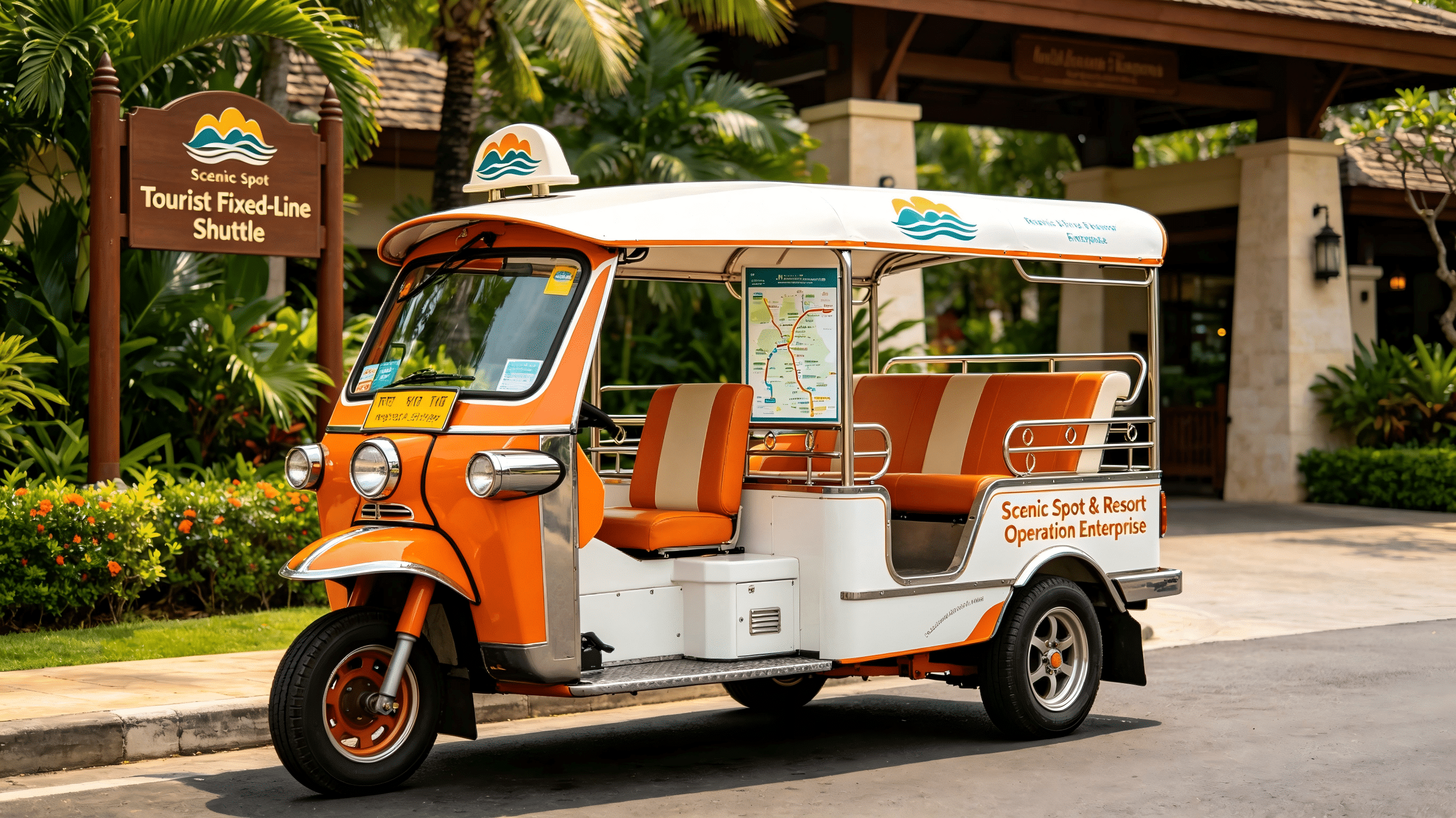
2.Scenic Spot & Resort Operation Enterprise: Custom sightseeing tuktuk for tourist fixed-line shuttle service
3.Last-Mile Logistics & Express Fleet: Closed-box cargo tuktuk for community parcel and grocery distribution
4.Municipal Sanitation & Urban Project Contractor: Special modified engineering tuktuk and sanitation tuktuk
5.Cross-Border Vehicle Wholesaler: Standard tuktuk whole-container bulk purchase for local secondary distribution
As global urban short-distance commercial transport demands keep rising, the commercial tuktuk has become a low-investment, high-yield essential fleet asset for small, medium and large B-end enterprises. For professional vehicle purchasers, choosing factory-direct wholesale commercial tuktuk, matching model power and carriage structure according to business scenarios, and signing batch after-sales cooperation agreements can maximize fleet operation profit and cut overall procurement risks.
In 2026, standardized, electric and customizable commercial tuktuk will further replace outdated old three-wheel vehicles, becoming the mainstream procurement trend of global B-end short-distance transport fleets. For enterprise buyers planning to expand transport fleet or update old vehicles, deploying high-quality wholesale tuktuk is the most cost-effective commercial vehicle investment solution this year.