Business Guide: Critical Points Before Buying an Electric Rickshaw
For businesses planning to purchase electric rickshaws, the biggest challenge is not simply selecting a vehicle, but ensuring the investment aligns with local market demand, operating conditions and long-term business goals. Many companies, distributors and fleet operators tend to make purchasing decisions solely based on the upfront price of the vehicle, yet a viable electric rickshaw business relies on far more considerations: whether there is sufficient demand in the target market, if the vehicle can deliver steady revenue, whether its operating costs are lower than those of traditional vehicles, if it can adapt to local road conditions and weather, and whether the supplier can offer sustained long-term support. All these critical factors deserve thorough evaluation before businesses place bulk orders.
I. Understand Your Local Market Demand Before Investing
Is there a real business opportunity for electric rickshaws? The first question every buyer should ask is: "Who will use this vehicle and how will it generate income?" Electric rickshaws are not limited to a single use case, as different markets adopt them for distinct business models.
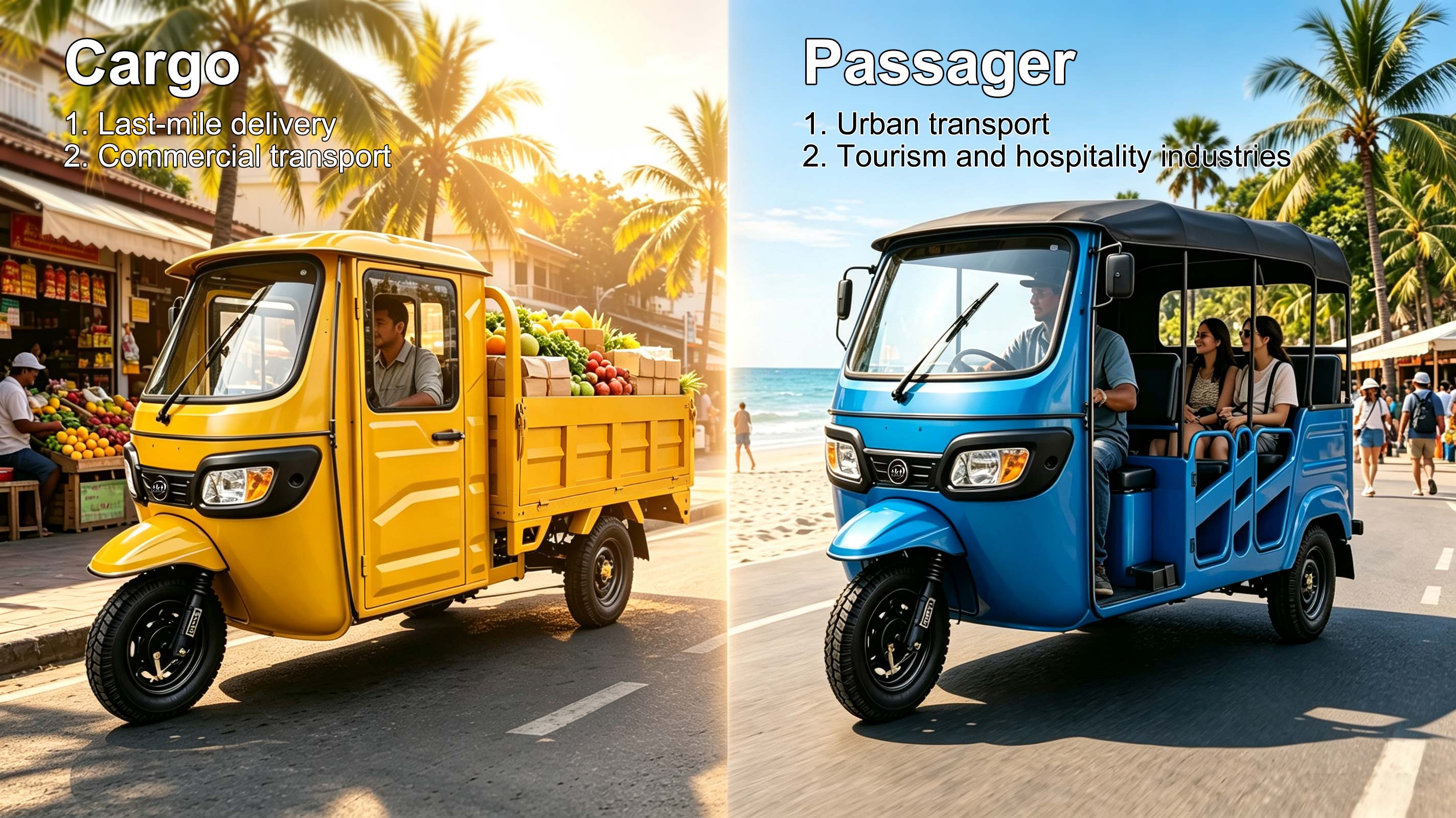
1.Passenger Electric Rickshaw Applications
Passenger models are commonly used for:
①Urban transportation
In many developing cities, electric rickshaws serve as an affordable option for short-distance transportation, with typical applications covering local taxi services, public transportation, tourist transportation, as well as hotel and resort shuttle services.
③Tourism and hospitality
Hotels, resorts and tourist attractions are increasingly adopting electric passenger vehicles, thanks to their quiet operation, comfortable riding experience, eco-friendly brand image, and excellent maneuverability for travel within large premises.
2.Electric Cargo Rickshaw Applications
①Last-mile delivery
With the growth of e-commerce, enterprises are in need of efficient vehicles for short-distance delivery, whose application scenarios cover food delivery, parcel delivery and retail distribution.
②Commercial transportation
Cargo electric rickshaws also see wide application across warehouses, farms, markets, factories and construction sites.
Before purchasing, businesses need to clarify their target customers, daily transportation demands and expected vehicle utilization rate, as a vehicle matching the local business model stands a far better chance of generating profits.
II. Calculate the Total Operating Cost, Not Only Purchase Price
1.Is an Electric Rickshaw Really Cheaper to Operate?
Many buyers only focus on upfront costs, but commercial users should prioritize Total Cost of Ownership , including purchase price, electricity fees, maintenance, battery replacement and spare parts. Electric rickshaws have lower daily energy costs than fuel vehicles; small daily savings bring considerable long-term advantages for fleets. For example, a daily-operated fleet of 50 electric rickshaws can greatly cut operating expenses versus fuel models. With fewer mechanical and moving parts, they need no oil changes and less mechanical maintenance. Nevertheless, buyers must evaluate battery quality, motor and controller reliability, and the availability of spare parts.
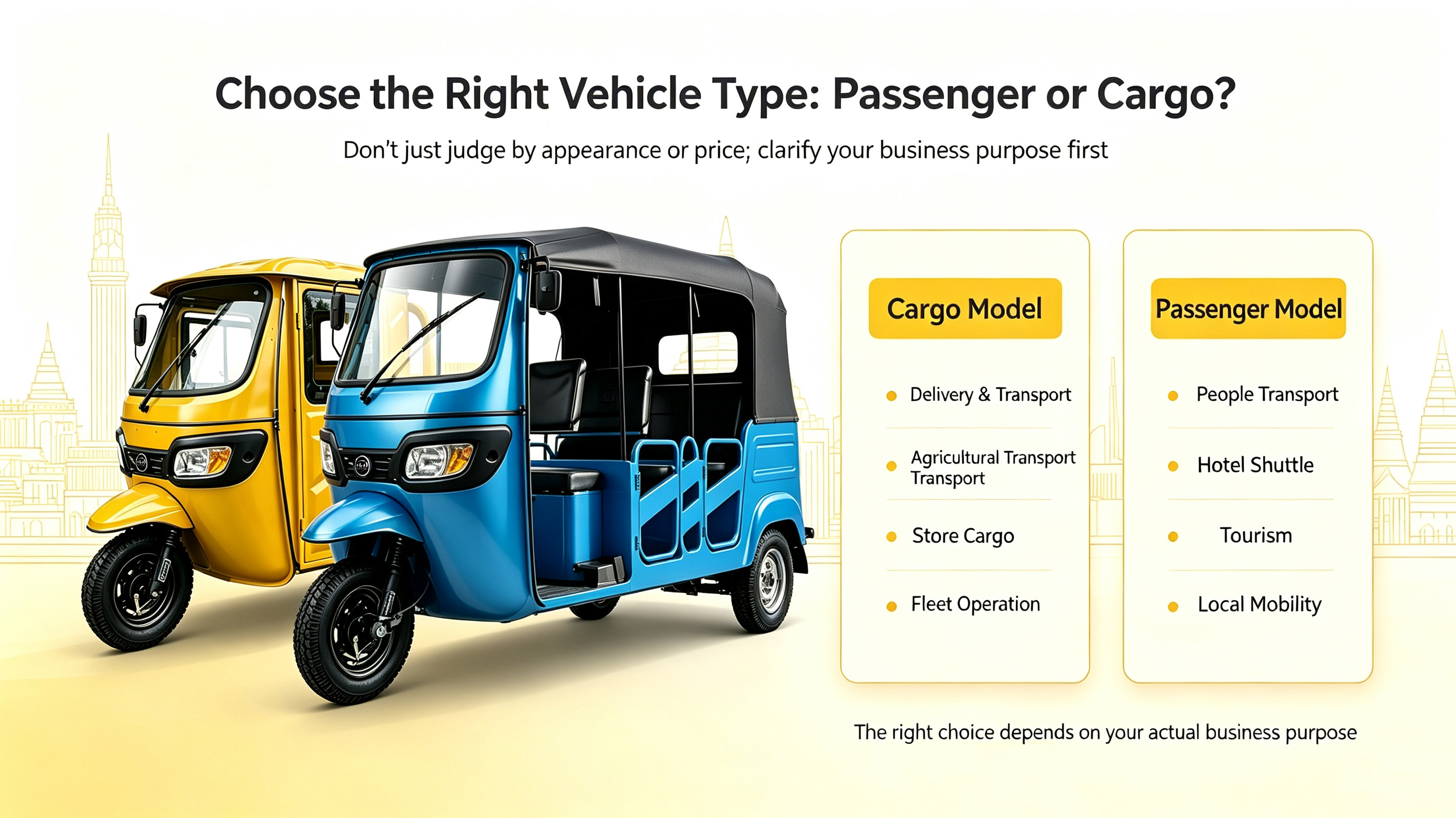
2. Choose the Right Vehicle Type: Passenger or Cargo?
One of the biggest mistakes buyers make is choosing a vehicle based only on appearance or price.
The correct choice depends on the business purpose:
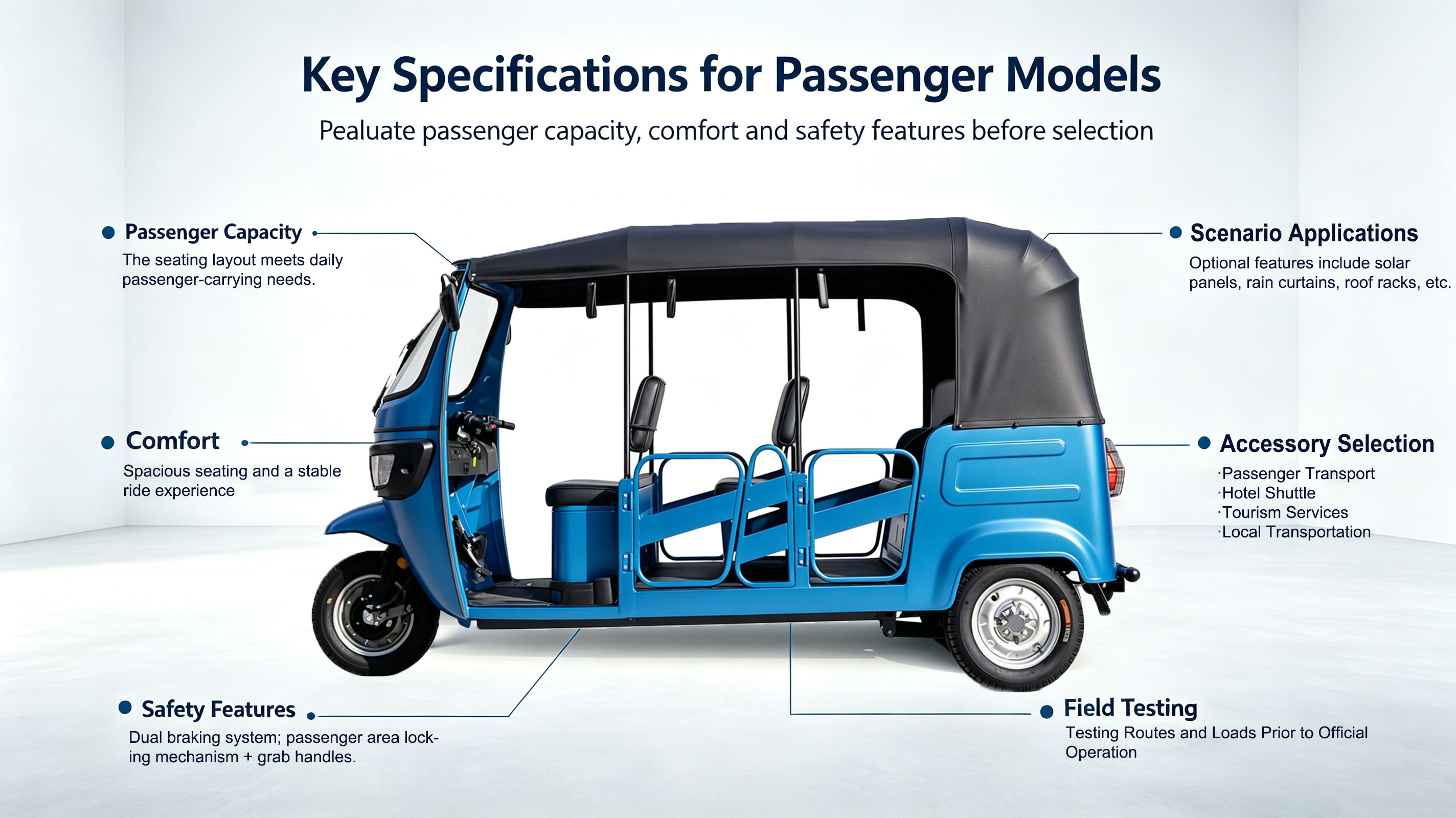
①.Passenger Electric Rickshaw
Choose passenger models when the business focuses on:
Transporting people
Hotel shuttle service
Tourism
Local transportation
Important specifications:
Passenger capacity
Comfort
Safety features
Driving range

②.Electric Cargo Rickshaw
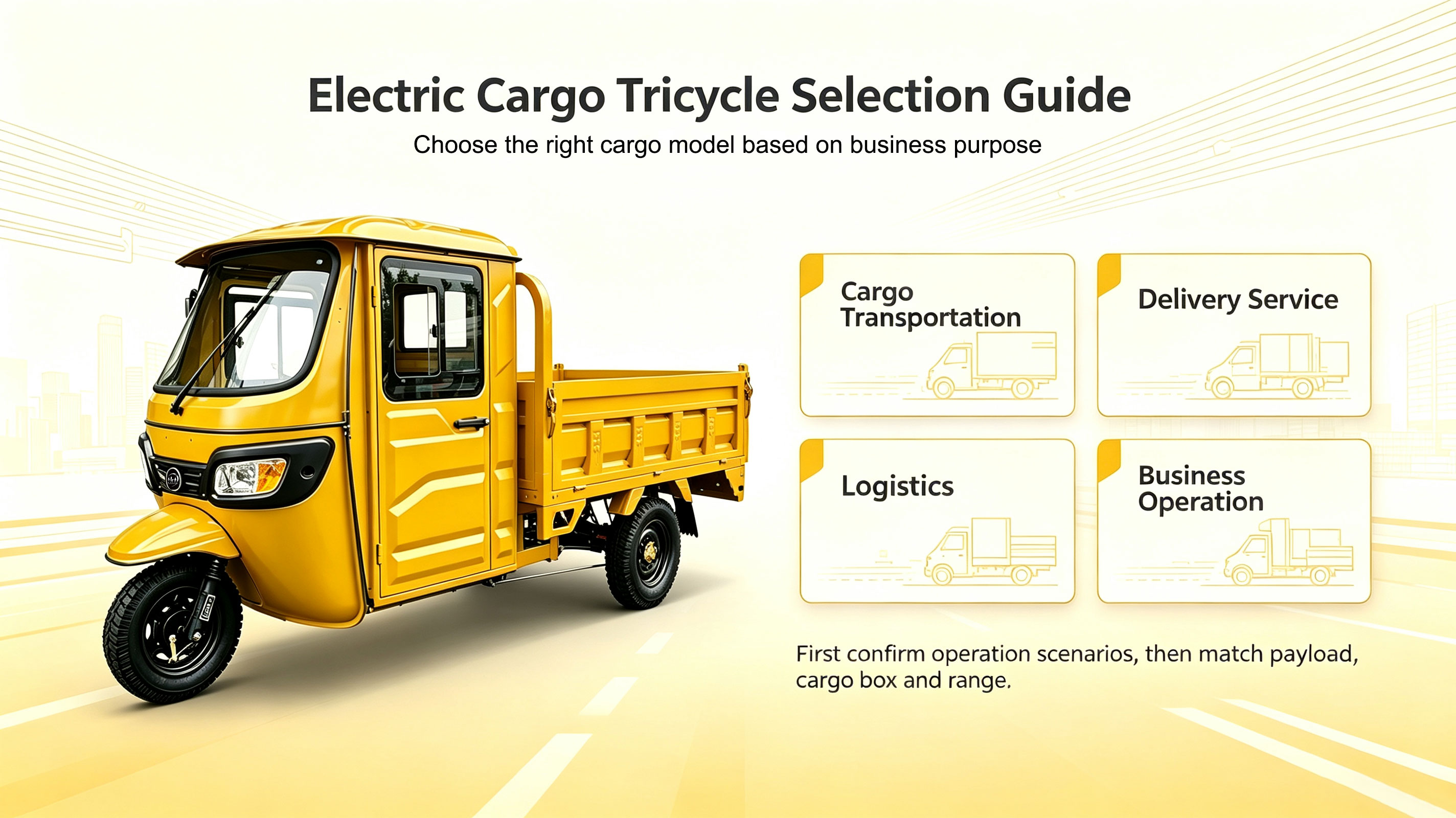
Choose cargo models when the business focuses on:
Goods transportation
Delivery services
Logistics
Commercial operations
Important specifications:
Payload capacity
Cargo box size
Motor power
Battery range

A delivery company transporting heavy goods has completely different requirements from a hotel transporting guests.
3. Check Whether the Vehicle Fits Your Local Environment
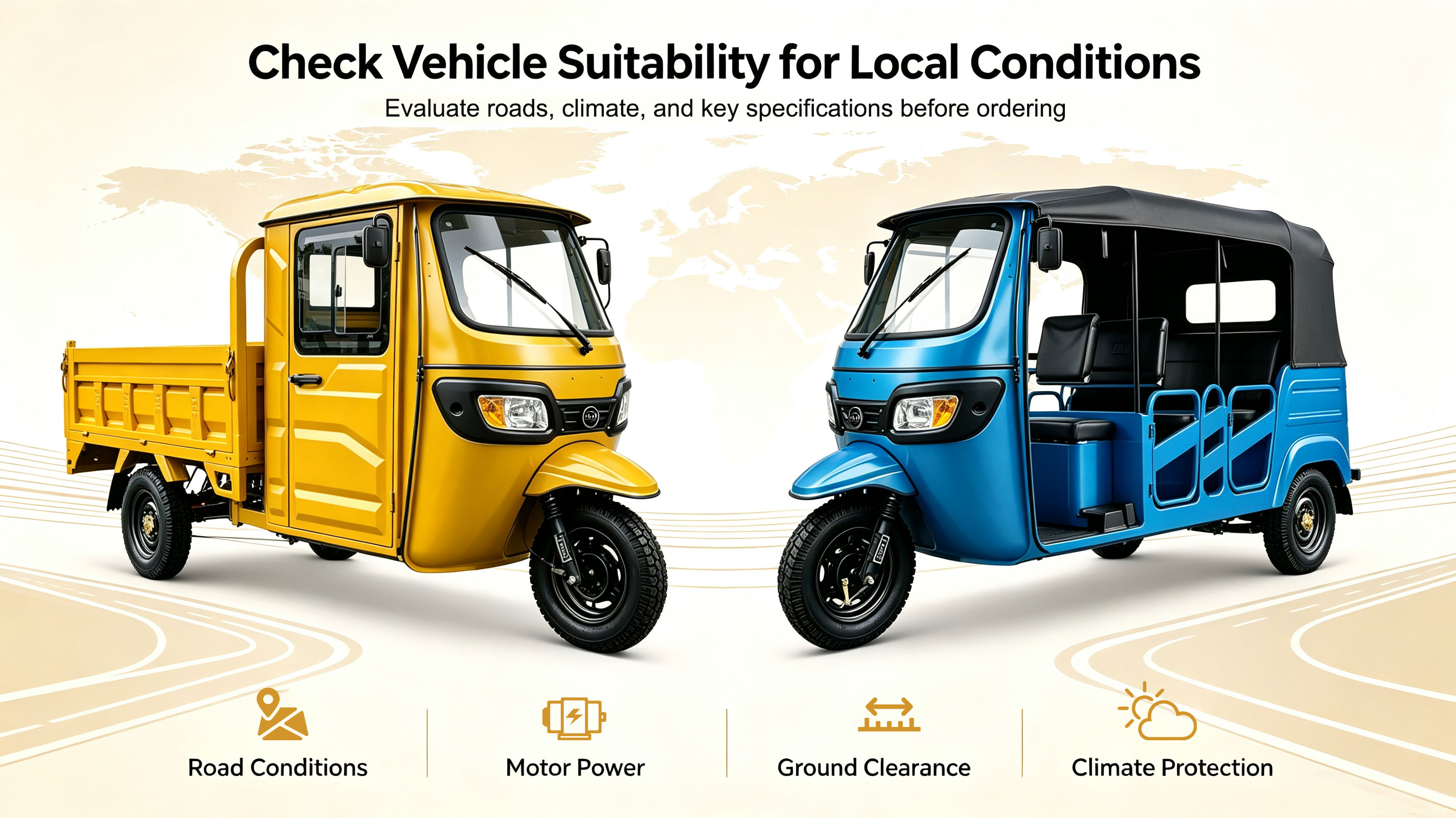
International buyers need to assess local conditions before placing orders. Varying road conditions including flat urban roads, rural routes, unpaved paths and mountainous terrain call for tailored vehicle configurations. Key specifications to consider are motor power, where higher power enables the vehicles to cope with heavy loads, slopes and rough roads, and ground clearance, which is essential for uneven roadways and rural regions. Meanwhile, electric rickshaws operate under diverse climate conditions such as high temperatures, heavy rainfall and dusty environments, so buyers should consult suppliers regarding battery protection, electrical system safeguards and waterproof design.
4. Battery Selection Is One of the Most Important Decisions
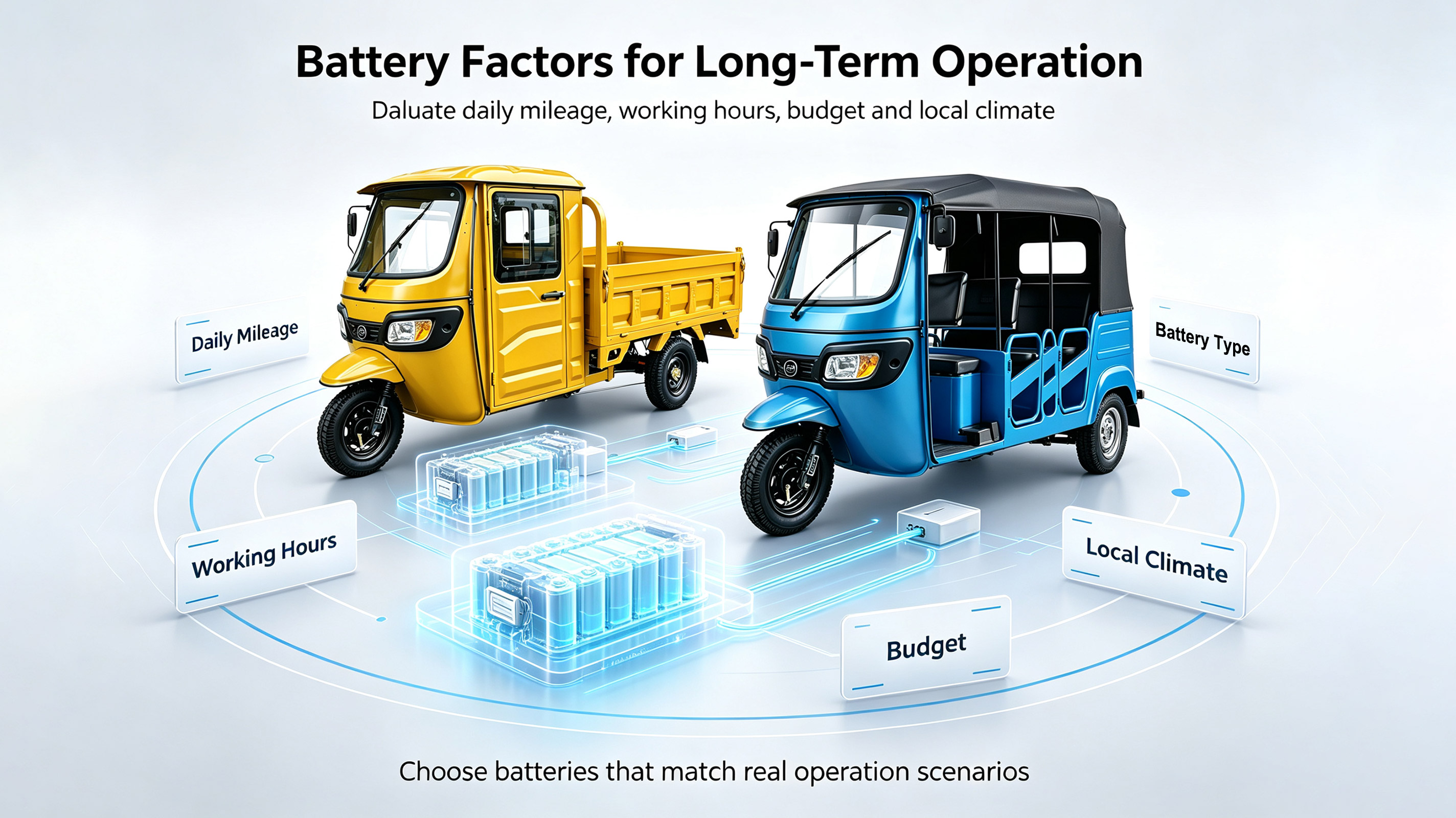
The battery directly determines driving range, vehicle lifespan and operating costs. Lead acid batteries feature a lower upfront cost yet come with drawbacks including heavier weight, shorter service life and higher maintenance needs, while lithium batteries offer longer lifespan, faster charging, higher energy efficiency and less maintenance. For businesses pursuing long-term operations, battery selection should take daily mileage, working hours, budget and local climate into account.
5. Understand Maintenance and After-Sales Support Before Buying
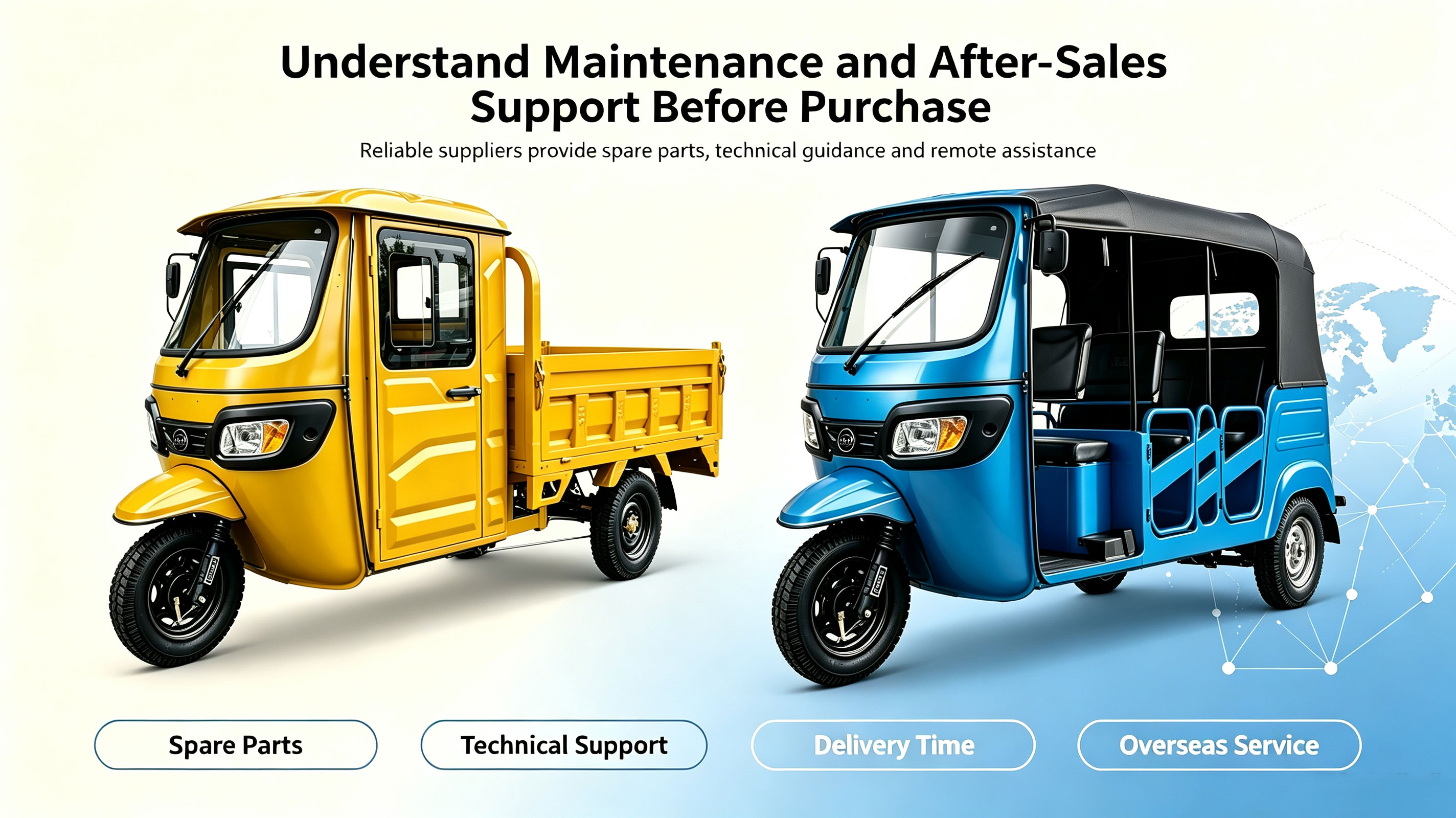
What Happens If the Vehicle Needs Repair?
This is a major concern for international buyers. A trustworthy supplier ought to offer spare parts support covering battery components, controllers, motors, chargers and brake parts, alongside technical support such as operation manuals, repair guidance and remote assistance. Before placing orders, buyers need to confirm whether spare parts are in stock, their delivery lead time, and whether the supplier provides services for overseas customers.
6. Calculate Your Expected Return on Investment
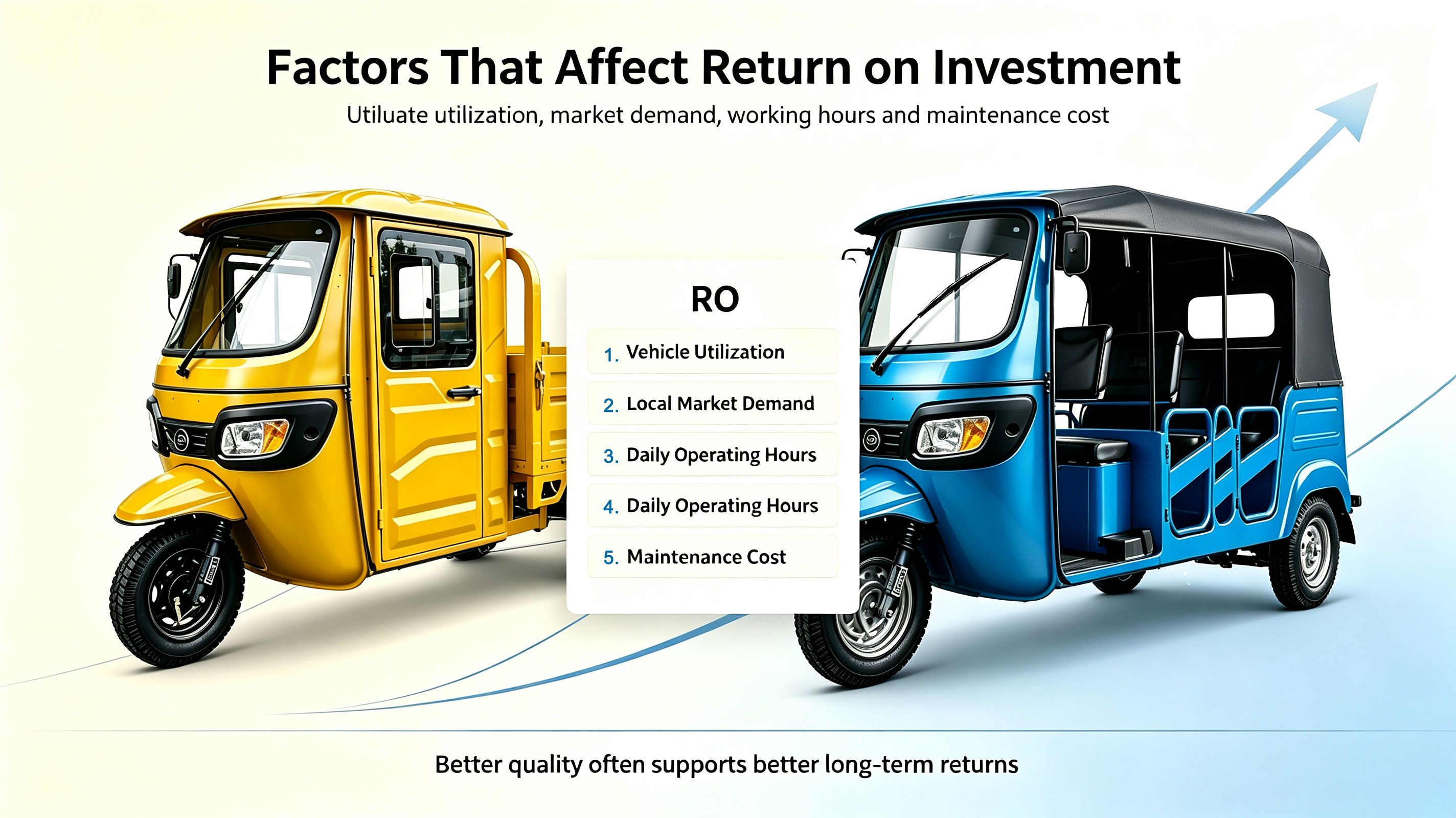
How Long Does It Take to Recover the Investment? Before making a purchase, businesses need to calculate total investment including vehicle cost, shipping fees, import charges and operating expenses, as well as expected revenue from passenger transport or delivery services. ROI is influenced by vehicle utilization, local market demand, daily operating hours and maintenance costs. Businesses should avoid selecting vehicles merely based on the lowest price, since slightly higher-quality models can deliver better long-term returns.
7. Start With the Right Supplier for Long-Term Growth