
Electric Cargo Rickshaw: The Smart Solution for Last-Mile Delivery and Low-Cost Logistics
Driven by surging demand for efficient, low-cost commercial vehicles amid booming e-commerce, urban delivery and small business logistics — alongside drawbacks of traditional fuel-powered vehicles including high fuel and maintenance costs and stringent emission rules — businesses are increasingly adopting electric cargo three-wheelers for local transport, last-mile delivery and goods distribution, making them a key component of the global shift to greener, more economical mobility as logistics firms, retailers and delivery operators embrace them to cut operational costs and boost delivery efficiency.
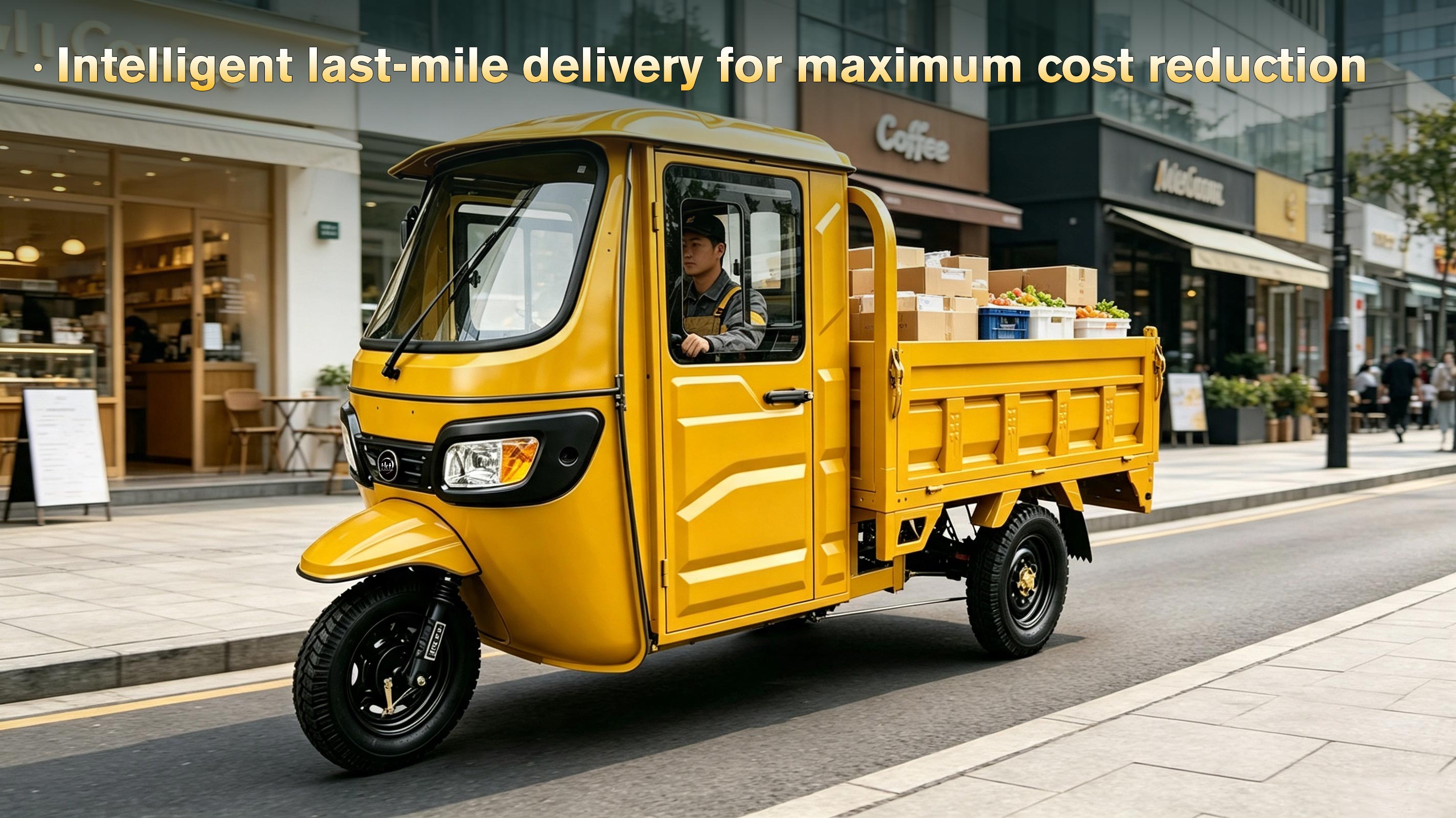
I.Why Electric Cargo Rickshaws Are Growing in Commercial Transportation
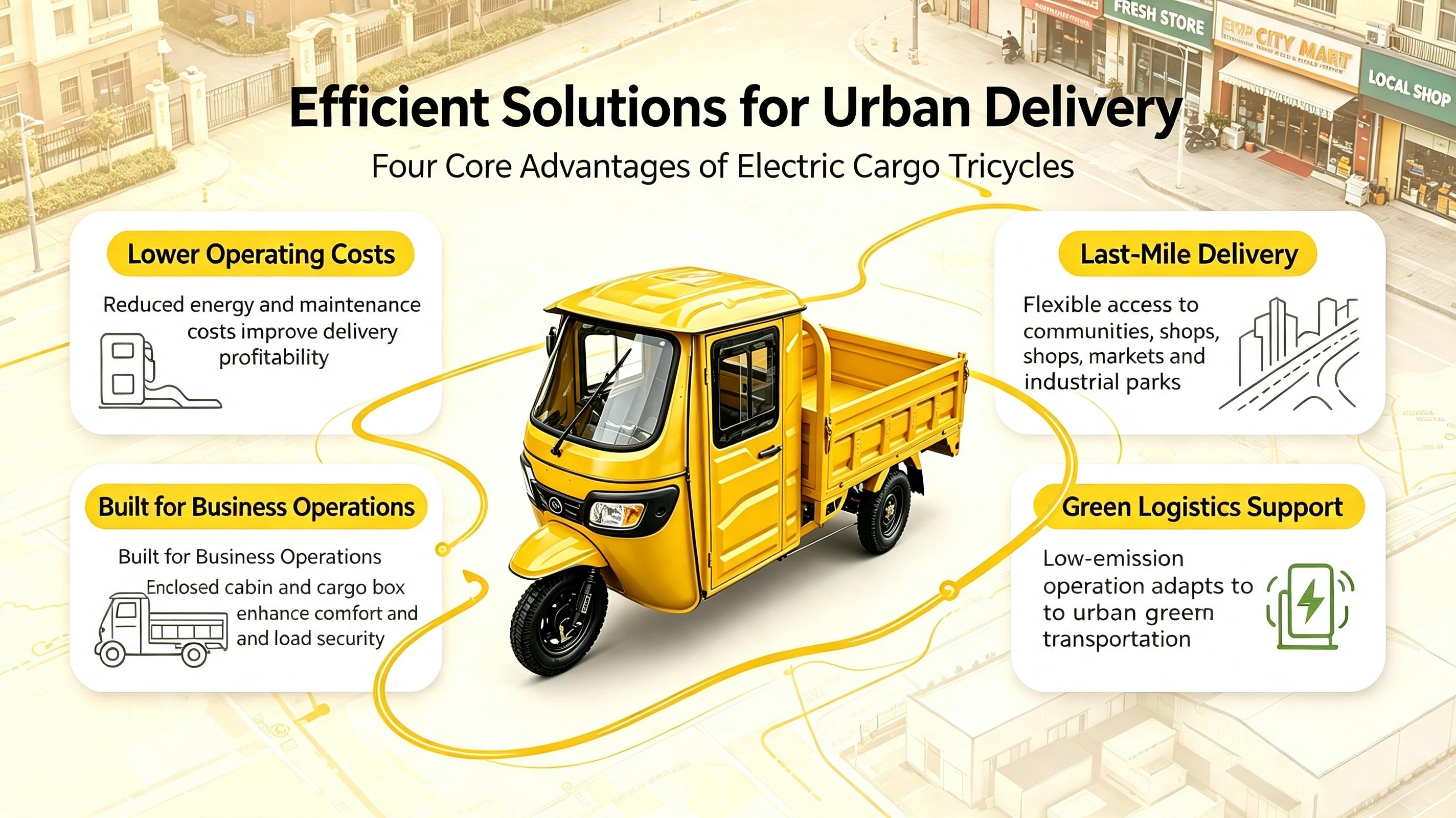
1. Lower Operating Costs Compared with Fuel Vehicles
For businesses running daily delivery routes, transportation costs have a direct bearing on profitability. Electric cargo rickshaws outperform conventional gasoline or diesel vehicles by featuring lower energy expenses, fewer mechanical parts, reduced maintenance needs and a longer service life. Cutting daily operational costs in this way greatly lifts profit margins for small enterprises, distributors and delivery operators, enabling them to secure superior long-term returns with vehicles that consume less power and demand minimal upkeep.
2.Ideal Solution for Last-Mile Delivery
The expansion of online shopping and local delivery services has fueled robust demand for compact commercial vehicles. Unlike large trucks, electric cargo tricycles are engineered for flexible urban transit, capable of navigating narrow city streets, residential neighborhoods, markets, industrial parks and commercial zones, which renders them ideal for food delivery,grocery distribution, parcel transport, agricultural haulage and retail supply chain tasks. Businesses across the globe are turning to compact electric vehicles such as these, as they deliver greater maneuverability for short-distance delivery operations.
3. Designed for Small Business and Fleet Operations
Equipped with a spacious cargo box and an enclosed cabin, this electric cargo tricycle meets the needs of commercial users requiring both high cargo capacity and all-around protection. Unlike open-style cargo tricycles, its enclosed design offers two significant advantages: first, superior weather protection—shielding the driver from rain, intense sun, wind, dust, and cold to enhance daily operational comfort; and second, enhanced cargo security. The enclosed rear compartment allows for the safe transport of packages, food, agricultural produce, tools, and various other goods, while also reducing the risk of cargo damage during transit.
4. Supporting Green Logistics Development
Many countries are speeding up the adoption of electric vehicles to cut transport emissions, and commercial fleets represent a critical sector where electrification can yield immediate benefits given the high daily operating frequency of delivery vehicles. Electric cargo vehicles enable businesses to lower carbon emissions, enhance environmental performance and comply with upcoming transportation regulations, and rising investments in electric delivery fleets by leading logistics firms reflect the mounting significance of electric commercial vehicles.
II.Key Features of Modern Electric Cargo Rickshaws
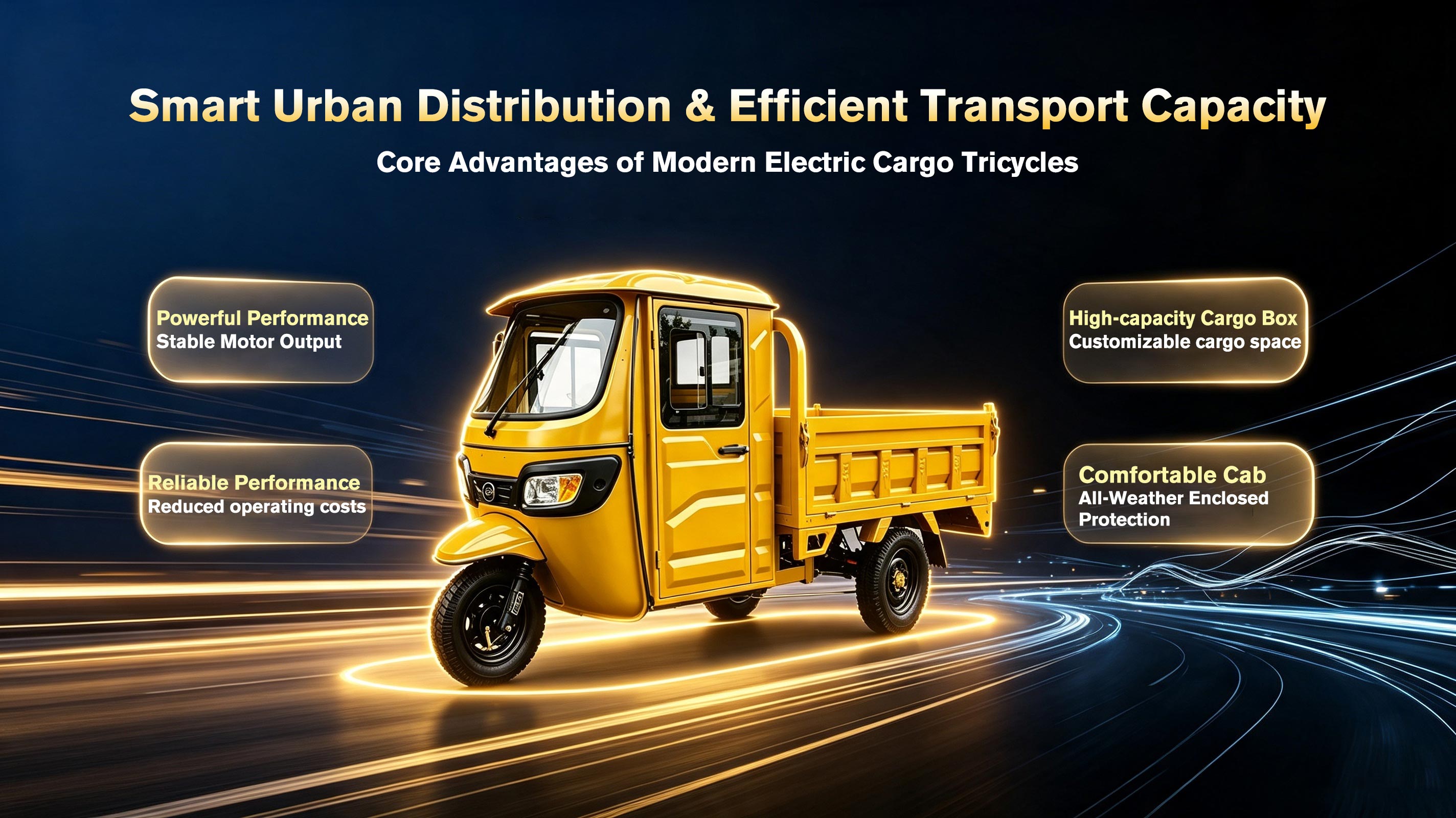
Modern electric cargo rickshaws come with a series of core features: they are fitted with a powerful electric motor that delivers dependable performance for urban delivery, short-distance transport and daily commercial operations; equipped with a large rear loading compartment enabling efficient haulage of commercial goods, with customizable cargo space to suit diverse business scenarios; and furnished with a comfortable driver cabin, whose enclosed structure boosts driving safety, comfort and protection against varying weather conditions.
III.Applications of Electric Cargo Rickshaws
Electric cargo tricycles are widely used in many industries.
1. Delivery and Logistics
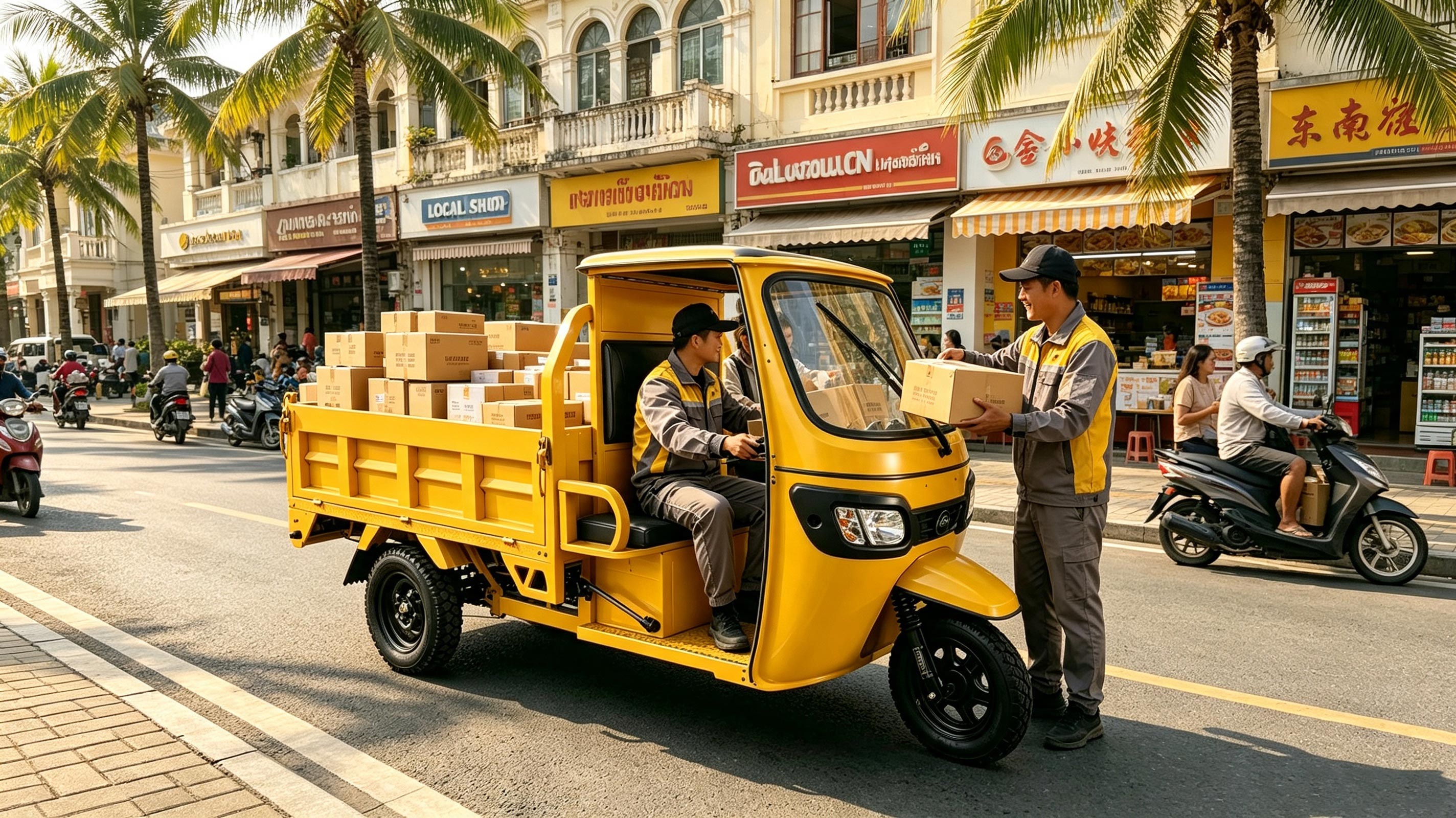
Suitable for:
Courier companies
E-commerce delivery
Local distribution
2. Agriculture Transportation

Farmers and agricultural suppliers use electric cargo vehicles for:
Fruits
Vegetables
Farming equipment
Local transportation
3. Retail Businesses
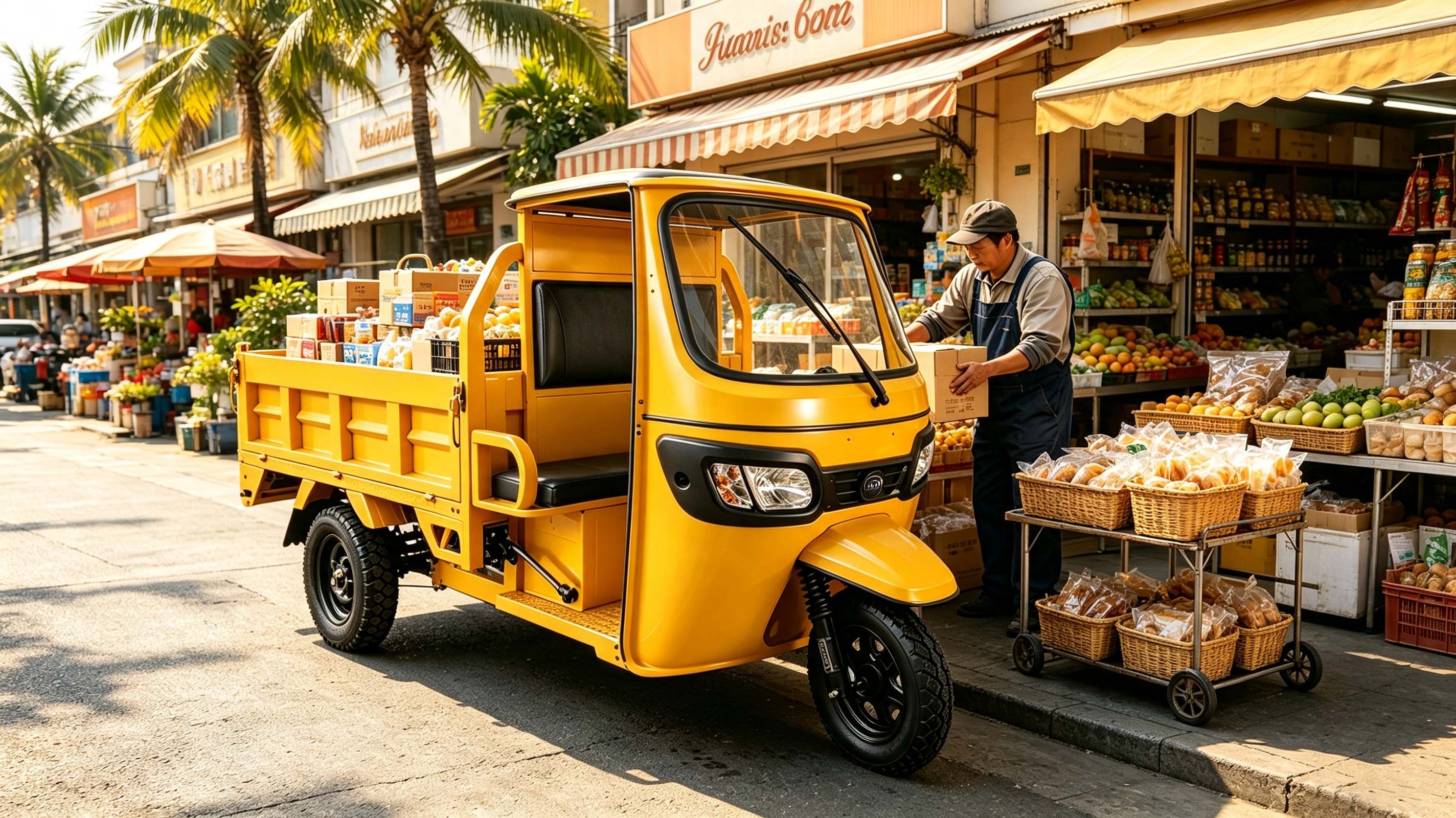
Small businesses can use electric cargo rickshaws for:
Store delivery
Mobile selling
Goods transportation
4. Rental and Fleet Businesses
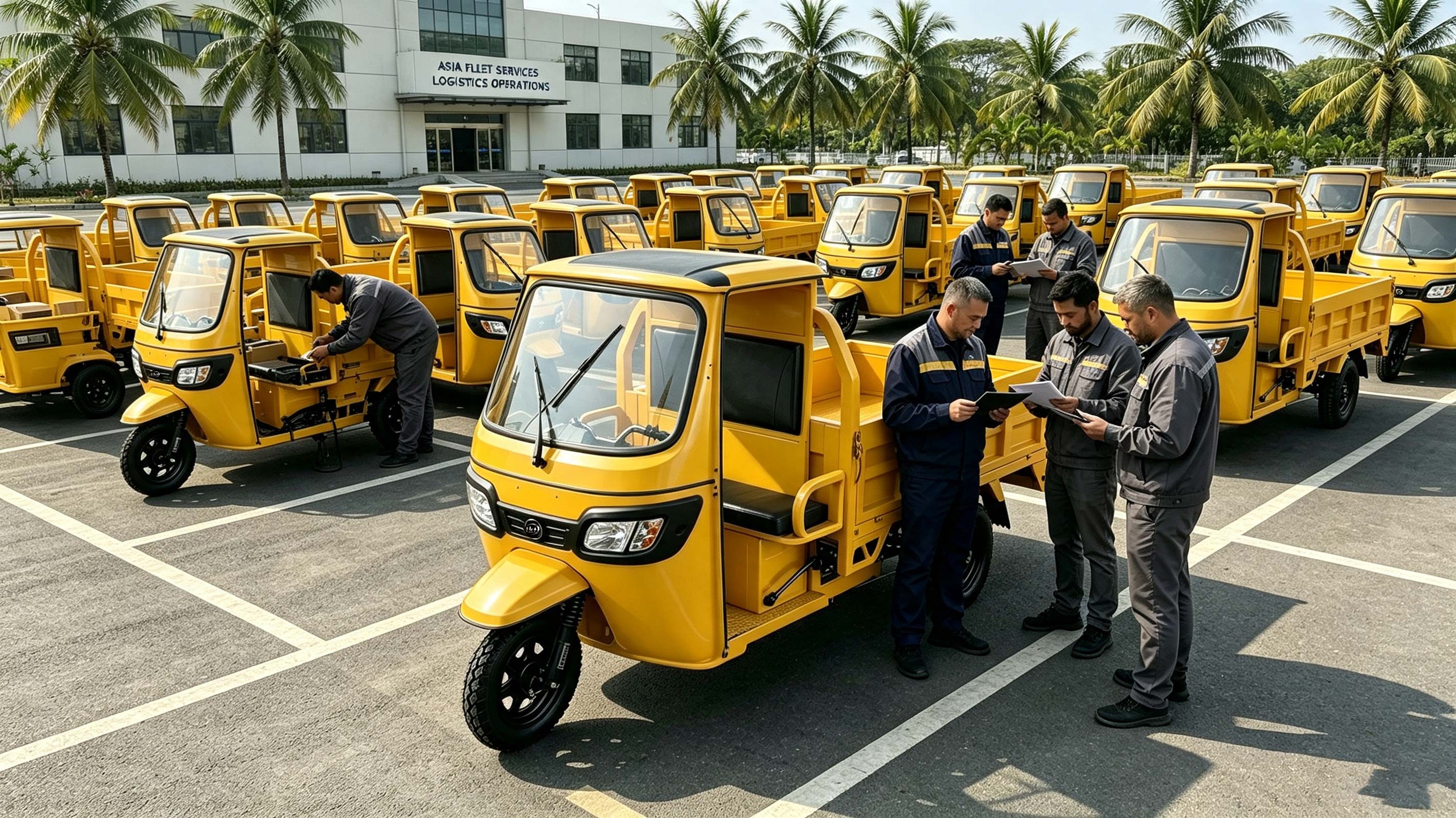
Entrepreneurs can purchase multiple units and provide transportation services for local markets.
IV.How Businesses Can Choose the Right Electric Cargo Rickshaw
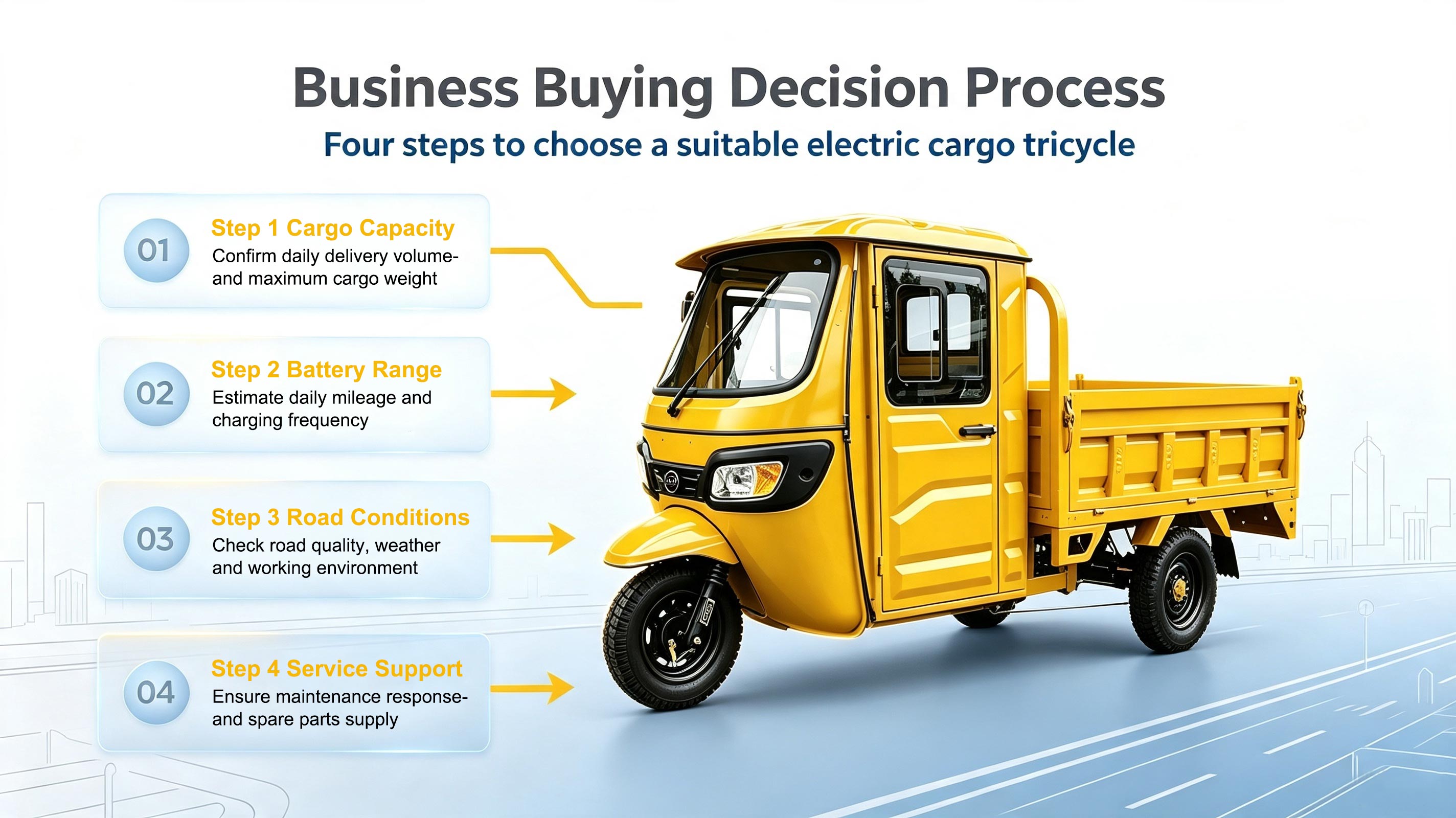
Before purchasing, buyers should consider:
1. Cargo Capacity
Choose a model based on:
Daily transportation volume
Cargo weight
Business requirements
2. Battery Range
Longer battery range helps reduce charging frequency and improves working efficiency.
3. Road Conditions
Different regions require different configurations depending on:
Road quality
Climate
Working environment
4. After-Sales Support
For commercial users, reliable spare parts supply and technical support are important factors when selecting a supplier.
Electric cargo rickshaws are emerging as a vital solution for modern commercial transportation. Boasting lower operating costs, flexible maneuverability and eco-friendly performance, these electric three-wheel cargo vehicles help businesses boost delivery efficiency and cut transport costs, serving as a practical option for enterprises seeking cost-effective logistics vehicles, fleet plans or bulk procurement for the future of urban mobility.