
How Electric Rickshaw Can Improve Hotel Guest Shuttle Services and Reduce Transportation Costs?
Hotels once competed mainly via rooms, services and facilities, but fiercer hospitality competition has made guest experience critical to satisfaction and repeat patronage. Often overlooked yet essential to guests’ whole stay journey, on-site transportation for large hotels and resorts can easily ruin overall experience—even with great lodging and service—due to lengthy walks, poor transit access or long shuttle waits. As resorts keep expanding to house multiple buildings, restaurants, leisure spots, pools, conference centers and parking lots, guests’ cross-area travel needs are surging, driving greater demand for efficient hotel passenger shuttle solutions.
I. Why Hotels Need Better Internal Transportation Solutions?
1. Large Hotel Properties Create Transportation Difficulties
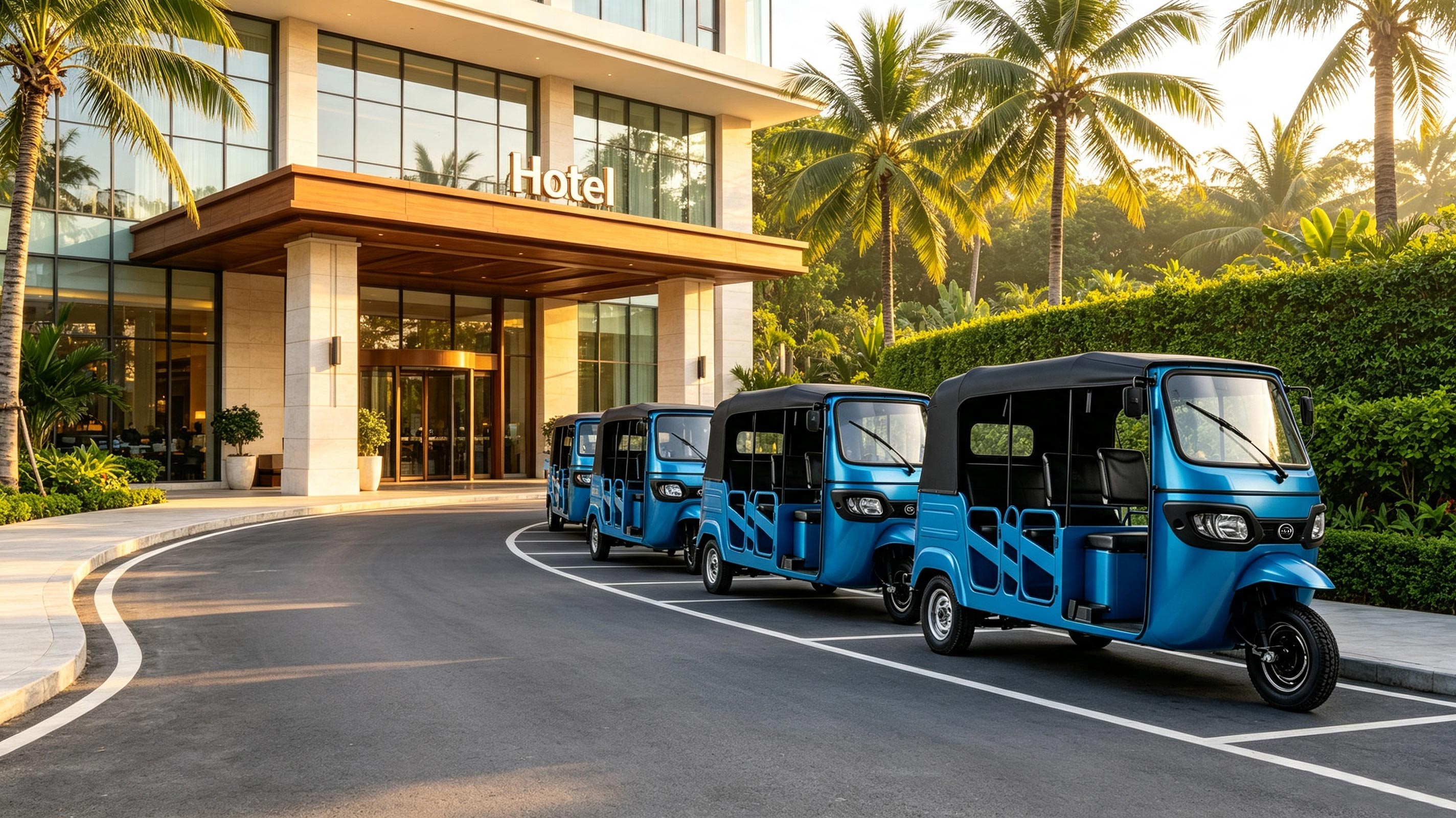
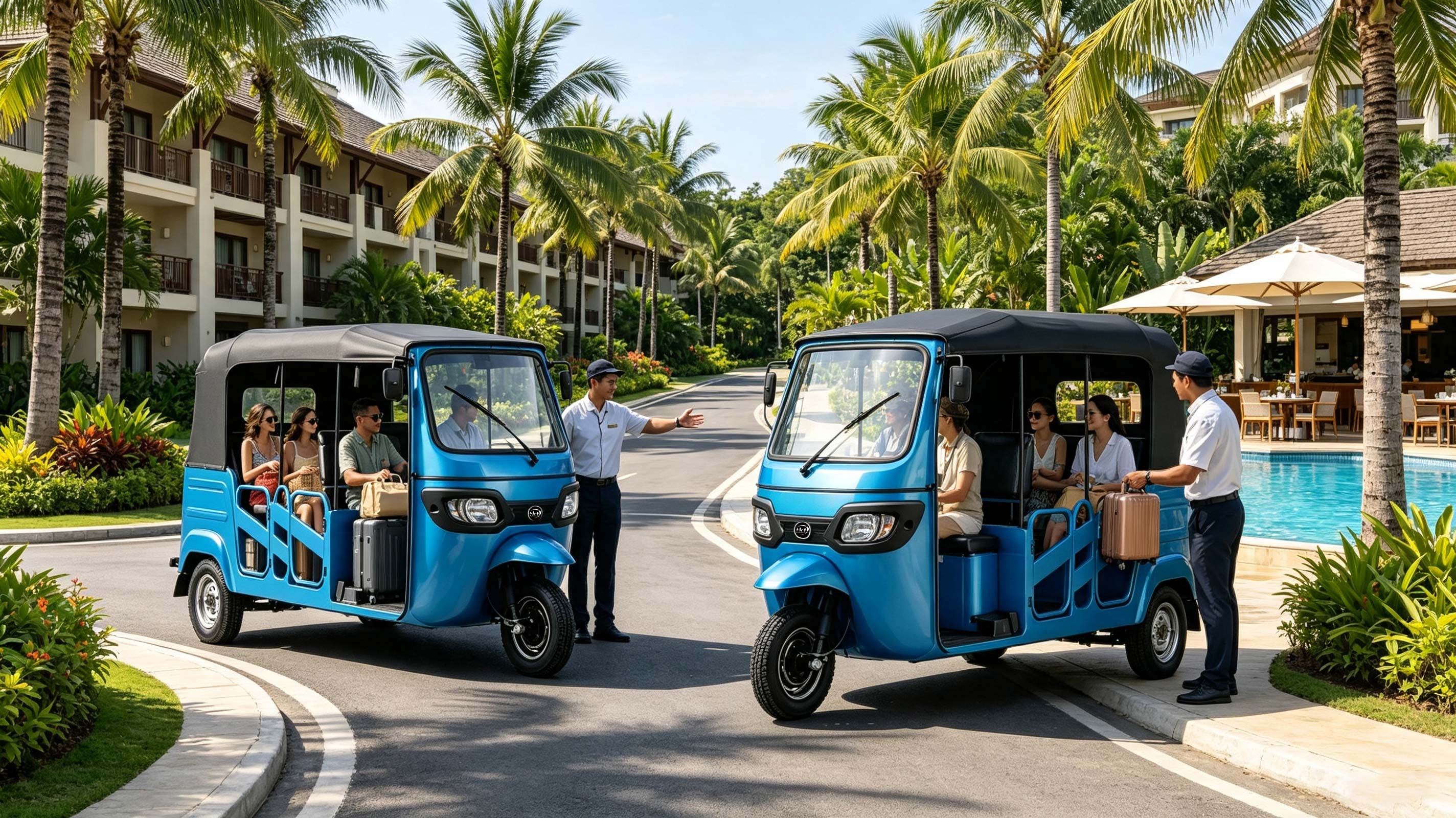
Unlike compact urban hotels, most sprawling resorts span vast grounds, forcing guests to walk hundreds of meters or farther to get between various facilities. A typical example is families checking into beach resorts: they often park their cars a considerable distance from the front desk, then trudge long haul with luggage and kids to their guestrooms after completing check-in, a troublesome experience especially for senior visitors and people with mobility impairments, all of which can be perfectly addressed by dependable hotel shuttle vehicles that deliver swift transfers across core zones for smoother, more convenient movements within the resort.
2. Traditional Transportation Methods May Not Meet Modern Hotel Requirements
Many hotels have tried different transportation solutions, but each option has limitations. Walking services require no additional investment, but they are only practical for smaller properties. When a hotel covers a large area, relying on guests to walk between facilities can reduce convenience and negatively affect service quality.
Fuel-powered shuttle vehicles can provide transportation capacity, but their long-term operating costs can become a burden. Hotels operating vehicles every day need to consider fuel expenses, engine maintenance, oil replacement, and noise pollution. Over several years of operation, these costs can significantly increase the total ownership cost.
Large sightseeing buses can transport many passengers at once, but they are not always suitable for hotel environments. Most hotel transportation needs are short-distance and frequent, requiring flexibility rather than large capacity. A smaller electric shuttle vehicle can often provide a better balance between efficiency, comfort, and operating cost.
II.How Electric Guest Shuttle Vehicles Improve Hotel Operations
1.Improving Guest Experience Through Faster and More Convenient Transportation
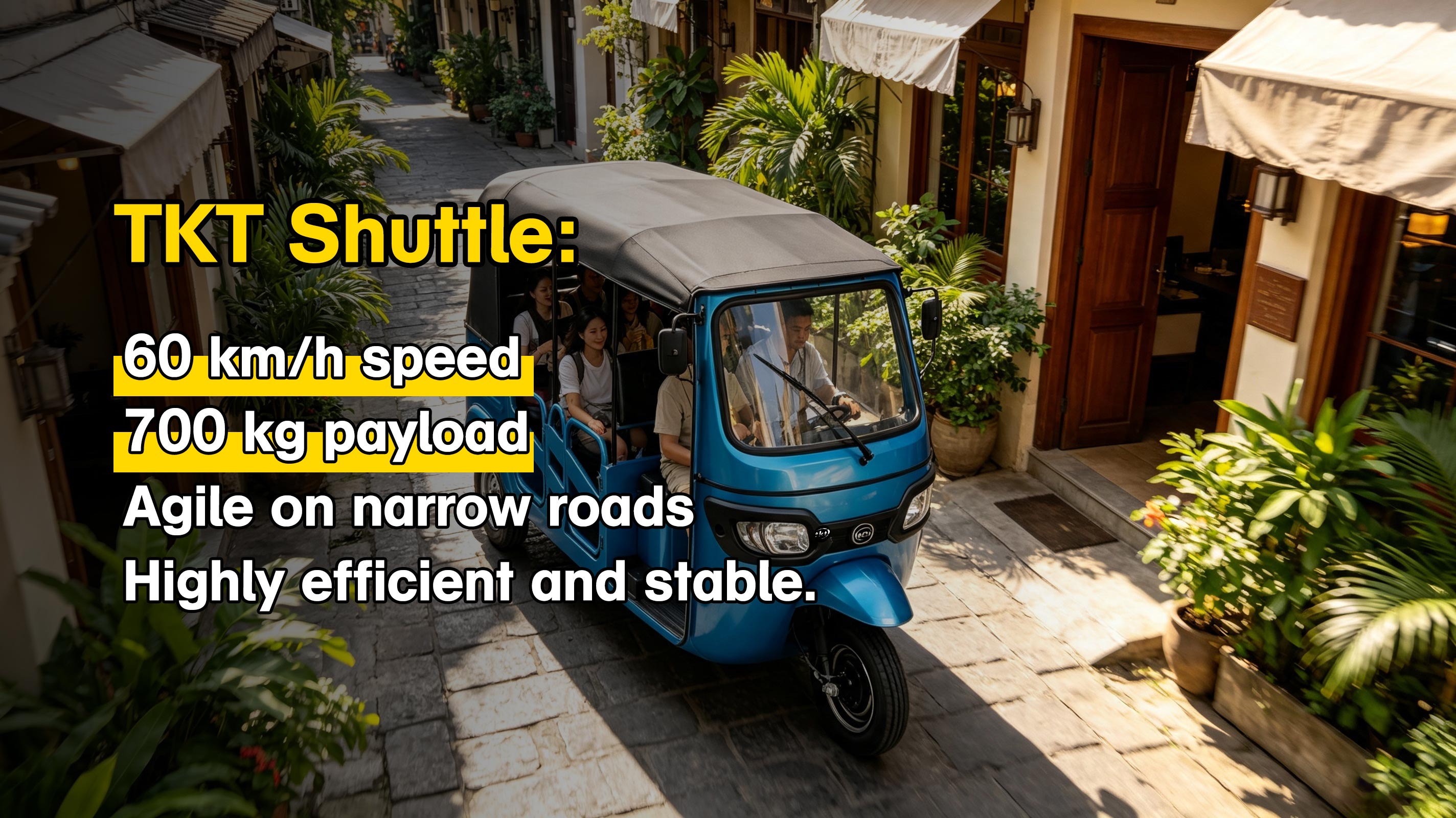
Hotel shuttle vehicles are more than just means of transport, as they form an integral part of the guest service system. Hotels usually encounter spiked transportation needs in peak seasons when guests require frequent rides across parking lots, guest rooms, restaurants and entertainment venues, and flexible electric shuttles help hotels design dynamic routes matching real passenger flow rather than being restricted to fixed transit arrangements.
Tailored for transportation services in hotels, resorts and tourist attractions, the TKT3000DK-5-01 electric guest shuttle delivers steady and efficient daily passenger transport with a top speed ranging from 55 to 60 km/h and a maximum load of 700 kg; meanwhile, its compact overall dimension of 3300×1260×1820 mm ensures great flexibility to travel smoothly along resort roads and hotel internal passages that are impassable for bigger vehicles.
2.Choosing the Right Battery Configuration for Continuous Hotel Operation
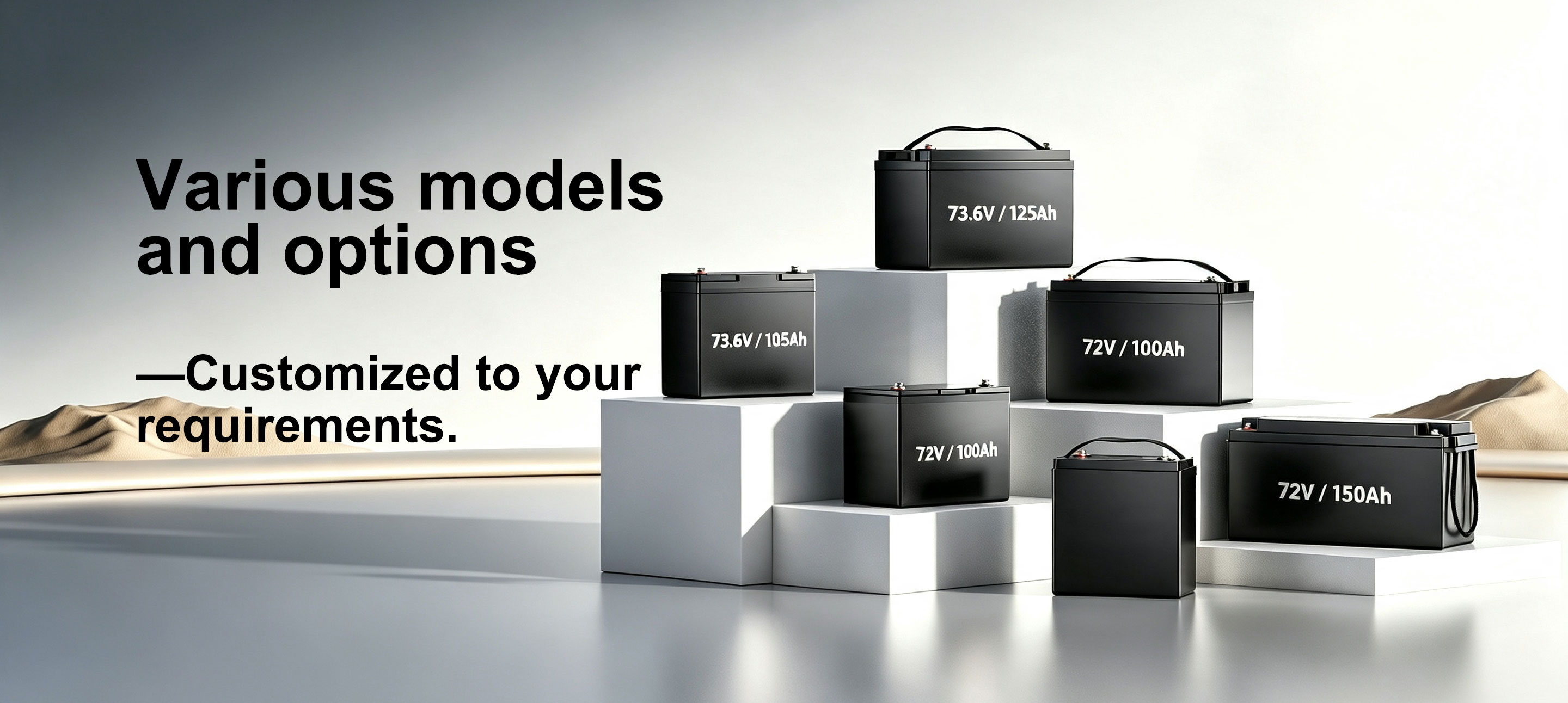
Battery performance stands as a critical indicator for hotels to pick electric shuttle vehicles, since these shuttles run dozens of passenger trips each day, and overly frequent charging will severely undermine overall transport efficiency.
The TKT electric passenger shuttle series offers customizable battery configurations to match diverse operational needs. The TKT3000DK-5-01 model adopts a 73.6V lithium battery system with three optional capacities (104Ah, 125Ah and 150Ah), corresponding to cruising ranges of 90–110km, 110–130km and 130–150km respectively, so hotels can pick a proper setup based on their campus area, transit mileage and daily service hours. Meanwhile, the TKT3000DK-1-01 serves large-scale resorts and high-demand transport scenarios with an upgraded maximum load of 1000kg and alternative 72V batteries in 100Ah, 120Ah and 150Ah specifications. Such differentiated product configurations enable hotels and tourist attractions to select targeted vehicles suited to their real operational situations rather than adopting uniform, inflexible solutions.
3.Commercial Power Performance for Different Hotel Environments
Hotel transport shuttles frequently work in complex operating conditions such as uphill roads, repeated stops and continuous passenger boarding and alighting, and insufficient vehicle power will lead to degraded operation efficiency when the vehicles are fully loaded with passengers or travelling on rough road surfaces.
Fitted with a 10.8KW permanent magnet synchronous motor, the TKT electric guest shuttle delivers steady power output for commercial transport scenarios. This power system sustains consistent and dependable performance during daily operation, perfectly adapting to guest transfers within resorts, internal hotel shuttling, tourist attraction transit and commercial property transportation. For operators, such stable power effectively cuts down service interruptions and helps deliver more trustworthy services to guests.
4.Comfortable and Reliable Design for Outdoor Hotel Operations
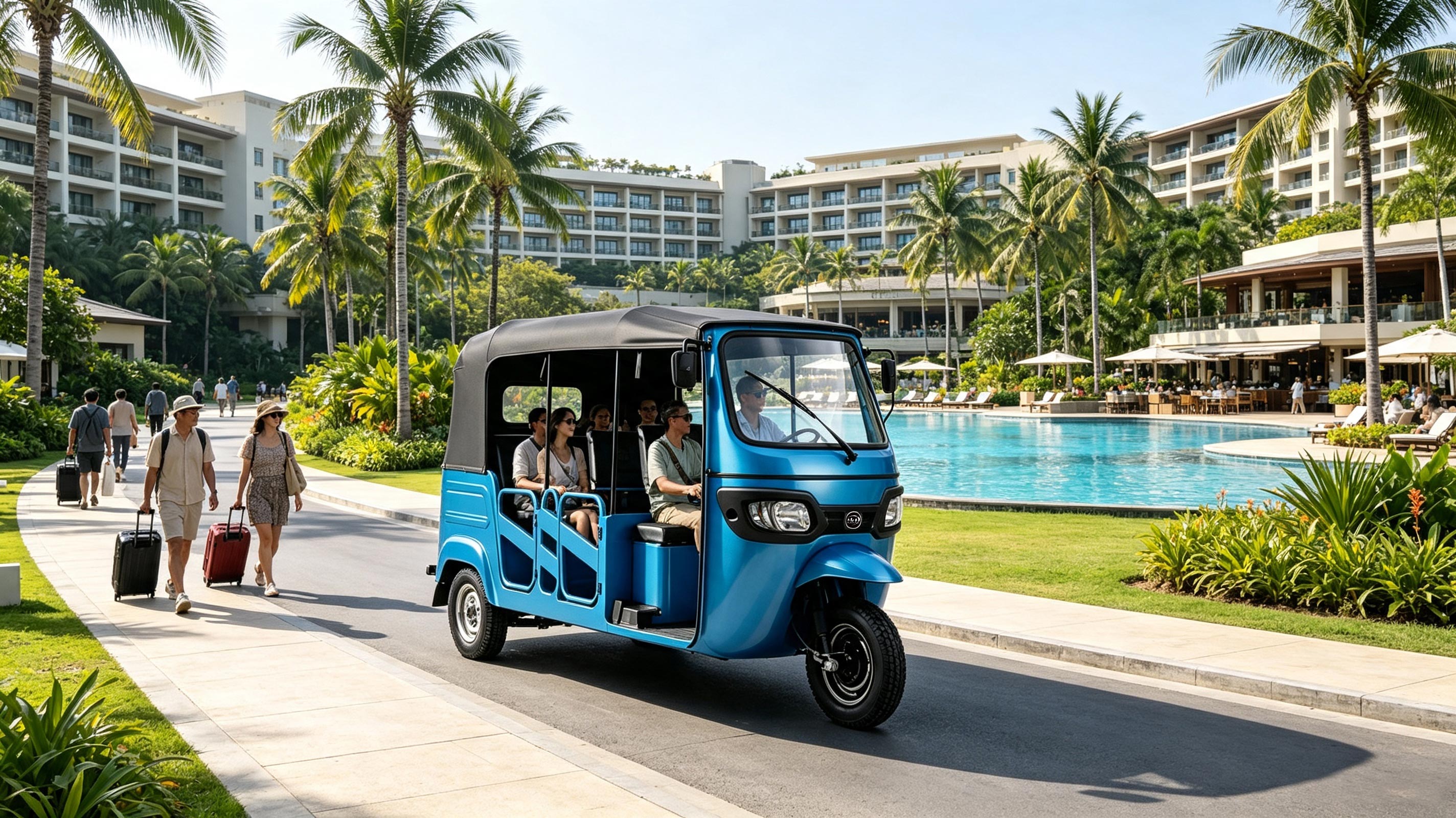
Since hotel shuttle vehicles are often operated outdoors, durability and passenger comfort are also important purchasing factors.
The TKT electric guest shuttle vehicle adopts a design suitable for outdoor commercial applications, including:
Front independent suspension
Hydraulic shock absorption system
Full enclosed cabin design
LED lighting system
IP65 waterproof protection
These configurations not only elevate riding comfort for passengers but also guarantee stable vehicle operation amid varied weather conditions. Especially for resorts, scenic spots and outdoor tourism projects, the vehicle’s waterproof design and sturdy structural build effectively lower operational faults triggered by harsh external environments.
III.How Should Hotels Choose the Right Guest Shuttle Vehicle?
1.Consider Real Operating Conditions Instead of Only Vehicle Specifications
A frequent pitfall in procuring hotel shuttle vehicles is choosing units merely according to seating capacity or upfront cost; instead, hotels ought to prioritize an analysis of their real transit demands first. Small hotels generally only require shuttle services connecting parking lots and lobbies, whereas large resorts demand round-the-clock continuous transport covering villas, restaurants, entertainment venues and guest quarters. Ultimately, proper vehicle selection must take site acreage, transit lengths, daily passenger flow and operation frequency into account, as vehicles fit for small-scale hotels cannot bear the heavy operational load of large resorts.
2.Plan Based on Peak Demand, Not Average Daily UsagePeak-hour transport demand is another key factor to weigh when buying hotel shuttles. Many hotels make procurement plans based on regular daily passenger volumes, while holidays and tourist seasons actually pose the biggest operational challenges. As illustrated by many resorts that run smoothly on workdays yet suffer transport shortages amid sharp surges in guest numbers during peak tourism periods, inadequate shuttle fleets will lengthen guest waiting time and damage satisfaction levels. Accordingly, hotel managers need to assess their peak operation demands in advance to determine the proper quantity and configuration of shuttle vehicles.
IV.Smart Technology Helps Hotels Manage Shuttle Fleets More Efficiently
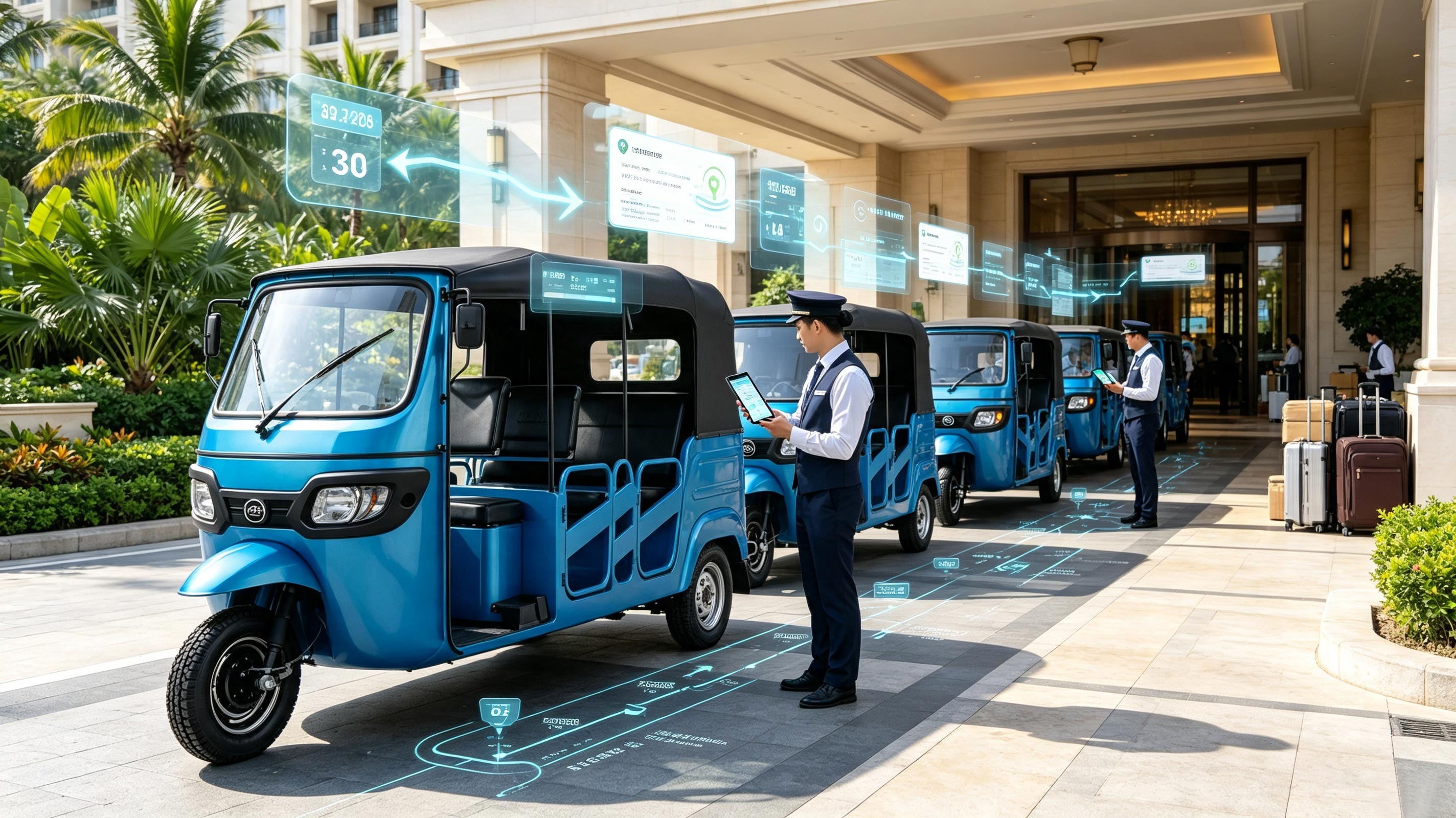
With hotels deploying growing fleets of electric shuttle vehicles, fleet management has emerged as a notable operational challenge. Fortunately, modern electric guest shuttles can be fitted with intelligent management systems integrated with GPS positioning, mobile apps and IoT monitoring tools. These functions enable hotel administrators to track real-time vehicle positions, oversee operational statuses, optimize scheduling efficiency and carry out predictive maintenance to avert vehicle faults beforehand. For large resorts and tourist sites running multiple shuttle units, such intelligent fleet management effectively cuts down manual management burdens while boosting overall transport operational efficiency.
The TKT electric auto rickshaw series provides flexible solutions for different commercial applications,
Click here to view full product information for TKT.